Ten Highest Closed Sales Within the Past Six Months in Miami-Dade County
July 13, 2010
by: Lucas Lechuga
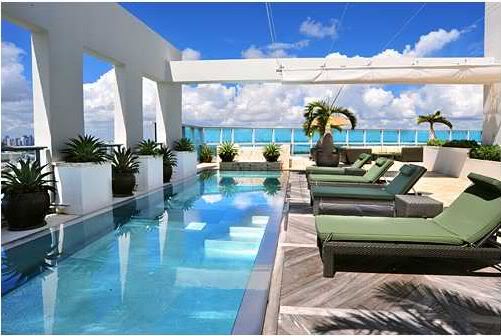
The following are the 10 highest luxury condo sales that have closed in Miami-Dade County within the past six months:
- The Setai South Beach – Penthouse B – 4 bedroom/4 bath (6,208 square feet) – This condo sold for $15M, or $2,416 per square foot, on June 4, 2010. It was listed for $19,999,999.
- Santa Maria – Unit 4901 – 3 bedroom/5 bath (10,000 square feet) – This condo sold for $11M, or $1,100 per square foot, on May 21, 2010. It was listed for $12.9M.
- Fontaintebleau II – Penthouse NO – 5 bedroom/5 bath (4,500 square feet) – This condo sold for $9M, or $2,000 per square foot, on May 14, 2010. It was listed for $9.8M.
- One Bal Harbour – Penthouse 2108 – 4 bedroom/4.5 bath (5,262 square feet) – This condo sold for $8.7M, or 1,653 per square foot, on May 25, 2010. It was listed for $12M.
- Villa del Mare – Unit 7223 – 4 bedroom/5 bath/2 half bath (6,820 square feet) – This condo sold for $6.75M, or $990 per square foot, on March 1, 2010. It was listed for $8M.
- Apogee South Beach – Unit 904 – 4 bedroom/4.5 bath (4,154 square feet) – This condo sold for $6.55M, or $1,577 per square foot, on May 21, 2010. It was listed for $6.85M.
- Apogee South Beach – Unit 1801 – 4 bedroom/3 bath (4,154 square feet) – This condo sold for $5.9M, or $1,420 per square foot, on April 16, 2010. It was listed for $6,795,000.
- Apogee South Beach – Unit 604 – 4 bedroom/3.5 bath (4,154 square feet) – This condo sold for $5.8M, or $1,396 per square foot, on June 18, 2010. It was listed for $6.25M.
- Apogee South Beach – Unit 704 – 4 bedroom/3.5 bath (4,154 square feet) – This condo sold for $5.3M, or $1,276 per square foot, on March 18, 2010. It was listed for $5.8M.
- Ocean Tower One – Unit 501 – 4 bedroom/5.5 bath (5,403 square feet) – This condo sold for $5.2M, or $962 per square foot, on June 3, 2010. It was listed for $6.25M.





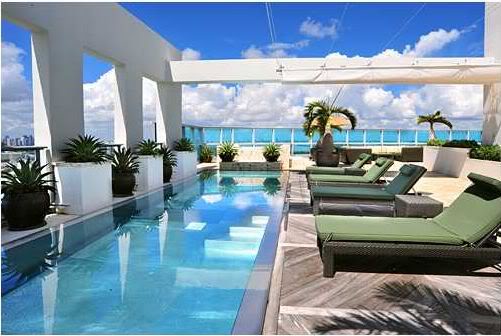

Lebron is here. The oil gush will be capped this week. The World is realizing what we locals already know – The bottom has come and gone in Miami. We (Miami) cannot be clubbed along with the rest of America. We have one thing what the rest don’t – Demand from foreigners. All in all, it is a beautiful day, week, month and a bright future for Miami.
Miami’s Downtown Comes Alive as Condos Fill With Renters
By Prashant Gopal – Jul 13, 2010
Miami Downtown Comes Alive as Young Renters Fill Condos
Brandon Klein has done what few Floridians can: go weeks without driving his car.
The 26-year-old tax accountant walks three blocks from his condominium tower on Biscayne Bay in Miami to his office at Deloitte LLP. On weekends, he and his friends hang out on the pool deck or share a cab to a local Irish pub.
He lives in Downtown, a neighborhood where young people are renting condos built during the 2004 to 2008 boom to attract second-home buyers. Thanks to the housing crash, Klein and two roommates pay about $900 a month each for a wraparound balcony, water views and access to a gym, spa and steam room.
“Five years ago you wouldn’t have kids fresh out of college living in luxury like this,” said Klein, sitting in front of the 24-hour concierge in the three-story lobby of his building at 50 Biscayne Boulevard, coordinating happy-hour plans by text message. His friends are concentrated in nearby Met I, which has 447 luxury units and a steakhouse on the first floor. They refer to the building as “Deloitte Dorm” because it’s home to so many employees of the accounting and consulting firm.
The 7,000 unsold condos in Miami’s core — a symbol of a building boom that collapsed and dragged the city into recession — are filling up and giving life to neighborhoods that previously closed after dark. New, year-round residents are cramming into restaurants, nightclubs and bars that didn’t exist a few years ago, and enjoying a lifestyle made possible in part by developers and banks seeking to recoup losses by renting luxury dwellings until the market recovers.
Creating A City
“I’m a big city person, and I always thought Miami didn’t have a real city,” said Dejan Krsmanovic, a 39-year-old biomedical engineer who was on a first date at Segafredo, a busy Italian restaurant and bar that opened in 2008 in the adjacent Brickell neighborhood, where the same trend is playing out.
“Miami Beach is not a city, it’s a resort,” he said. “This is beginning to resemble a city.”
Full Story: http://www.bloomberg.com/news/2010-07-13/miami-downtown-comes-alive-as-unsold-condominiums-fill-with-young-renters.html
Is there a rhyme or reason why some foreclosures show up on the MLS but the vast majority do not? I would think they would try to put all the hi-end foreclosures on the MLS but that doesn’t seem to be the case. The foreclosure market is getting really active now but it’s a pain to navigate the Dade govt site.
I will see your article (thanks for the post, by-the-by) and raise you:
RealtyTrac: Foreclosures remain high
South Florida Business Journal – by Oscar Pedro Musibay
It’s more of the same for Florida in terms of foreclosures, which keeps the Sunshine State at No. 3 in the country, according to a new RealtyTrac report.
Florida registered the nation’s third-highest state foreclosure rate, with 3.15 percent of its housing units, or one in every 32, receiving a foreclosure filing during the first six months of the year.
But, in terms of the number of properties receiving foreclosure filings, its 277,073 ranked second in the U.S. That’s a 9 percent decrease from the prior six months, but a 3 percent rise from the first six months of 2009.
Miami-Dade had 38,395 foreclosure filings, or one in every 26 residences, just beating out Broward, which registered just under 38,000, or one in 21. Palm Beach came in a distant third, logging 18,083 foreclosure filings, or one in 35, according to the RealtyTrac report.
Palm Beach recorded a larger increase than its sister counties, however, when comparing the first six months of 2010 to the same time last year. Palm Beach recorded a 26 percent increase in properties with foreclosure filings, while Miami-Dade saw an 11.5 percent increase and Broward had a 4 percent increase.
Banks have also moved aggressively to repossess property in South Florida in the first six months of the year, according to a recent report from CondoVultures.com. During each month, banks took back an average of 4,000 South Florida properties, up 83 percent from the first half of 2009.
Peter Zalewski, managing principal of Bal Harbour-based real estate consultancy Condo Vultures LLC, said he expects the inventory will come onto the market in the near future as discounted REO product, putting further pressure on pricing.
Miami home prices continued to slip between March and April, according to Standard & Poor’s Case-Shiller Home Price Indices report. Only Miami and New York saw declines among the 20 cities in the index, which is seen as a leading measure of U.S. home prices.
Condo Vultures said Miami-Dade County led the surge in bank repossessions, experiencing a 125 percent spike on a year-over-year basis. Palm Beach experienced a 112 percent jump, while Broward repossessions increased 42 percent, according to the report based on circuit court records from Miami-Dade, Broward and Palm Beach.
At the current pace, nearly 50,000 properties would be repossessed in South Florida in 2010, which would outpace the modern day high of 30,400 in 2009, Condo Vultures reported. Just three years ago, only 10,100 were repossessed.
Zalewski has a different take on the data for South Florida, which has a positive story to tell.
According to CondoVultures.com, South Florida foreclosure filings are actually down 34 percent, to 34,500 in the first six months of 2010 from about 52,200 in 2009, 37,800 in 2008 and 8,000 in 2007. Zalewski said his numbers are accurate because he eliminates double counts that might affect the data of other companies.
His numbers puts the region on pace for less than 70,000 actions in 2010, down from 97,000 in 2009.
Despite the spike in repossessions, bank-owned properties still represent only about 6 percent of the 67,000 residences on the resale market in the three-county region as of July 12, according to Condo Vultures.
http://southflorida.bizjournals.com/southflorida/stories/2010/07/12/daily28.html
Check?
scriv
LMFAO!
The true value of a unit is basically (monthly rent) * (100).
So that condo the guy is renting for 900 a month is only worth $90,000 dollars. I bet the owner paid $250,ooo.
There is no doubt Miami is a desirable place to live, and the people renting these units at market value prove that.
The problem is that flippers, realtors, and “investors” are hoping that prices will return to 2005 levels and they never will again.
Figure out what a unit could rent out for per month. multiply that figure by 100 and thats what that unit is truly worth just to break even on your investment.
Unfortuanatly prices are still way overvalued and have a long way to crash. The bottom has not come and gone…its only just beggining. 🙂
Chris, while I admire your twisting of facts, no one said the condos are renting for $900. They are saying, 2 roommates are paying $900 each. That is a rent of $1800. Now go back and do your math right with out cheating.
While I agree that 2005 prices are a long way off (in fact it is Summer 06 which saw the peak, not ’05-another one of your wrong assumption), unless there is a prolonged no growth in the economy, I predict that we will rebound to 06 levels in about 5-7 years provided there is no new construction between now and then.
why bother — You think Miami housing is going to double in price in the next 5-7 years? Really?
If you could find a way to bottle that optimism, you’d be filthy rich!
Chris #4- You hit the nail on the head. I’m renting for $1900 a month. Thus my unit should be valued at $190,000. In reality they are asking over 400k for units similar to mine. The bottom is still a long ways away. Even more so with the record wave of foreclosures Scriv mentioned above. Numbers do not lie.
Joe, Hope is what keeps this World moving. If you lose all hope, It is anarchy and mayhem.
Yes , I believe in what I said. But with 2 major conditions.
1. Economy should grow at a normal rate of 3% even if not at a good 4 or 5% . Presently we are at 1 or 1.5%. If it stays this low for a prolonged period, then all bets are off. No one seems to know where we are headed regarding the economy. Up, Down or Sideways.
2. No new construction should come on line from now until the next 5 years. This is quite a possible scenario.
Lets see what happens.
Nice one Joe!
scriv
Does this whore Zalewski ever shut up?
From an article in the South Fla Business Journal re Lebron living situation:
“Peter Zalewski, of Condo Vultures Realty, said James could buy an entire condominium project with the kind of money he is rumored to have offered for the Potamkin property. The average 1,000 square foot condo is selling for $200 a square foot.
Zalewski, who specializes in bulk deals, said it would make more sense given James’ age and the commute to Gables Estates for the superstar to invest in a group of condos on several floors, tearing down the walls to make one unit. He could rent the others.”
Sure, Pete. Sounds like a great idea, as long as you can structure the deal, get your fee, and can issue another wise, self-congratulatory quip in a press release. Never mind the logistical nightmare of trying to combine several units into one and the nightmare of gawking, harassing fans/paparazzi all over the condo 24 hrs a day. And like LeBron would want to be a landlord for a bunch of hanger-ons living next door.
Seriously, probably the stupidest idea I’ve ever heard of.
Drew…. couldn’t agree with you more…
Somebody PLEASE tell this so called “expert” to shut up
I just read about another bulk-buyer transaction. What fascinates me is the discount the buyer received and the percentage that the buyer owns in the development: 66 % is a big bet.
scriv
——————————————————-
Friday, July 16, 2010, 12:07pm EDT
Dizengoff buys 106 condo units for $8.2M
South Florida Business Journal
Dizengoff-Trading Group has acquired 106 condominium units at Bermuda Cay in Boynton Beach.
The Israeli firm, which has a U.S. office on Glades Road in Boca Raton, paid $8.2 million in cash for the units.
The 35-year-old complex, at Woolbright Road and Federal Highway on the Intracoastal Waterway, was converted from apartment units to condos five years ago.
Dizengoff said it paid $78 a square foot, which amounts to a 78 percent discount to the average selling price during the height of the real estate boom. With the purchase, Dizengoff controls 66 percent of the 160 units, most of which are already leased out.
http://southflorida.bizjournals.com/southflorida/stories/2010/07/12/daily48.html
Guys,
Here is my two cents about condo prices going back to 2006 levels……
I think regardless of how well the economy does and how low the supply of condos, I don’t think prices will rise back to those 2006 prices. At least not for the next 10-15 years.
For me as an end user and not an investor, I would be very happy just to see the day when all the new condos in my Brickell area are sold (or re-sold) to more end-users (for prime or 2nd home), so there will be less renters in these buildings.
Prices going up is good for the investors so they can sell their condos and make their required profit, but for me I rather see the condo prices stabilize and stay where they are, so my property taxes stay low.
I would like to see Brickell become more of a real community with more shops and businesses. (bookstores, movie houses, etc, not just bars and restaurants). Right now it’s just a bunch of new condo towers with amazing views of the bay and ocean. It would be great if someday it can become a community like areas of Boston.
I just got back this week from a business trip in Boston, WOW what a beautiful city! It is well maintained and perfect. I guess Boston had many years to make herself perfect.
Boston compared to the very young disorganized city of Miami, is like a beautiful mature wealthy woman who has it all together. While Miami is like a very beautiful young 18 year old poor girl who has only her beauty and nothing else, so she whores herself out to anyone just to survive.
It looks like Boston has a large upper middle class, compared to Miami’s small middle class. It’s too bad Boston gets cold and doesn’t have the beautiful beaches that Miami has. However I better get used to the cold in Boston because next week I will be starting the management of a long term project for a large retailer in the area.
During the winter there I will be in my temp apt next to the heater and will be crying wishing I was back in Miami. But being self employed, I have to go where the money is.
“I would like to see Brickell become more of a real community with more shops and businesses. ” – – ownerinfinity
Amen brother.
scriv
I have to say I don’t see prices going back to previous peak prices soon either. I’d guess recent reports that indicated prices won’t reach previous highs until 2030 are proabably the best guess. If prices hit previous highs in 2030 that would mean an average of about 4% appreciation per year over the next 20 years. For prices to hit previous highs in the next five years you’re talking about 15% appreciation per year. Than is not happening.
why bother, there is no way that no new construction wont come on line in the next 5 years. Developers are out buying land right now at insanely low prices and will be building on this land within a year. If I recall correctly the Sklyine at Mary Brickell condos to be built on top of the current garage is ready to go any minute now.
I interviewed with a developer that is building projects right now.
from what i understand, hard costs for building a high-rise condo are roughly $180/foot. include soft costs like marketing and sales, and we’re talking closer to $250/foot. so for a developer to make it worth his while prices need to be in the $400/foot range. this may make sense for beachfront properties, but for middle of the road buildings like most new construction in brickell and dowtown, this price seems a long way off.
so my prediction is that we wont see any new high rise construction until condo values go up substantially, very close to peak prices…. while having no new construction will help raise prices faster as demand goes down… lets see how this plays out.
supply** goes down
slothdale, new construction will return-perhaps at very low prices as well. construction is a major part of the economy and cannot stay dormant-but deflation can decrease construction cost in the future.
interestingly, luxury buildings today who have filled with renters to cover carrying costs of investors. how will they fare against new building 5 years from now? if you are a buyer, do you buy a brand spanking new building-where rules may very well limit rentals from the very beginning based on our past experience? or do you buy into largely investor rental community for your home? could be an interesting scenario 5 years from now for our current crop of luxury buildings, unless you are on the water.
Another article about Lebron’s arrival energizing the downtown market:
http://southflorida.bizjournals.com/southflorida/stories/2010/07/19/story7.html?b=1279512000^3651841
Article about the HOA initiating foreclosures:
http://www.cnbc.com//id/38260141
I just put an offer in on a house in the suburbs of Detroit, Michigan. It is a middle class-upper middle class area (Think Kendall, FL) to give you an idea.
The house sold for $210,000 in 2004.
It is 1635 square feet, 4 bedrooms and 2 baths. In a really nice subdivision with a great school district.
They are asking $105,000 in July 2010. That is a 5o% decrease.
Now before you say…Detroit is a ghetto…blah blah blah…which is true. The suburbs are kind of their own seperate entity and are very nice.
How does this relate to you?
I lived in Miami in 1999. During that time real estate prices in the suburbs of detroit and suburbs of Miami were very similiar. IN FACT IT WAS ACTUALLY CHEAPER TO BUY A HOUSE IN MIAMI IN 1999.
During the housing bubble Prices in Michigan rose about 50%…In Miami they rose about 300%.
I still believe that prices in Miami will continue to crash untill they lose their 300% housing bubble gains.
When you see 85-90 a sq foot for a house in Kendall you will know the crash is over. I believe houses are still selling for like 150 a sq foot in Kendall (have not followed it in a while) so I believe you have a long way to go.
“Pending financing, Miami’s overheated condo market will get its latest infusion when the Mediterranean-style building is completed at the end of 2011. As the first residential building built in the Brickell corridor since the condo glut began, its developers hope it will pump new life into the area’s real estate market.”
“We want to be one of the only products available in the market upon delivery that’s new,” said Isos Stamelos-Monroe, 30, SkyPalace’s vice president of sales.
Also when you look at cost you also have to remember that land values have obviously gone down. So while it may not make sense for a developer that bought the land defore the boom to build thats not going to stop a new developer from coming in and purchasing the land at todays prices to build.
Also considering rent prices are going up and the lack of dedicated rental buildings I would expect that some developers would be eyeing this market as a nice place to start building. As you have all these people moving into the market your going to have to develop some moderately priced housing for them to stay if you want the growth downtown to be sustained.
I called Camden Brickell to see how much they were renting units for and because of the location they were charging as much as most condos with much nicer finishes.
Just wanted to give you a visual example.
Here is a 1851 sq foot house in Miami Florida selling for $270,000. A price of 146 dollars a square foot.
http://www.realtor.com/realestateandhomes-detail/12870-Sw-60-Te_Miami_FL_33183_1118324662
Here is a much larger 2172 sq foot house in Oakland Township, Michigan selling for $174,900. A price of $80.oo a square foot.
http://www.realtor.com/realestateandhomes-detail/3040-Bridlewood_Oakland-Twp_MI_48306_1118805437
Still don’t believe me???
Look at the Sales history on zillow…in 1990 the Miami house sold for $106,900 or $57 dollars a square foot. This house was worth 80.00 a square foot in 1999 and thats the price it has to fall back too.
http://www.zillow.com/homedetails/12870-SW-60th-Ter-Miami-FL-33183/44255978_zpid/
Conclusion….Detroit real estate market is at or near the bottom and now is a great time to buy. However, The Miami Market still has to fall another 40% before the bottom is reached!
RE scrivener # 12
the discount from app $400 a foot is so large because as a 35 year old rather conventional project -meaning not a luxury hi rise-it was never worth the $400 a foot they tried for.
Recall 3-4 years ago I read an ” insider’s” offering circular for a 2-3 story glorified garden apartment building located in Broken Sound in Boca where the insider price was app $300 a foot : told my lawyer friend who kept a 700 sq ft unit there that was priced at app $ 225 th to run for the hills and not look back.
Owner at infinity #13
Are you involved with the attempted revival of the mixed use project that was going to replace the now shuttered Filenes-and the famous original basement store across from the old Jordan Marsh-likely now a Macys ?
The area looked seedy last time I was there : the real growth will be Cambridge with hi tech, medical leading the way.
george ,
Owner at infinity #13
Are you involved with the attempted revival of the mixed use project that was going to replace the now shuttered Filenes-and the famous original basement store across from the old Jordan Marsh-likely now a Macys ?
The area looked seedy last time I was there : the real growth will be Cambridge with hi tech, medical leading the way.
===> No, I am not involved in that. The project that I will manage in the Boston area is for a large retailer that wants to extend their retail stores further into the European market.
Parts of the CNBC HOA foreclosure story Gixxer 1000 posted in #21 above don’t seem to add up (especially the scenario outlined in the third-to-last paragraph). How can there be a judicial transfer of title in which the existing mortgage(s) aren’t cleared at the same time? It seems ludicrous that an HOA could take title to a property over a delinquent $500 HOA balance, then evict the mortgage-holder and rent the place out for a year or more while the original mortgage remains in place under the evictee’s name. I know Florida courts and laws are often a joke, but a foreclosure process that doesn’t yield a clean title seems like a waste of time (and an invitation for all sorts of fraud and abuse).
After reading “housingfear chris” I had to laugh.
His premise is so far off it is ridiculous.
Communities rise and fall and that influences prices. Are you going to argue that $2000 sq. foot on Central Park West is overpriced?
Detroit is unfortunately a slum exacerbated by the fall of the auto industry. I don’t see the city recovering anytime soon. On the other hand, Miami is progressive, an international business center. There is no argument that Miami has suffered from the real estate bubble causing prices to decline due to oversupply. But the inventory over time will be absorbed and prices will recover.
What does Detroit offer that will contribute to price appreciation in the years ahead?
Ask that question regarding Miami and the answer is easy.
I live in the NYC metropolitan area. Compared to prices here I can’t believe the quality of living for $200 sq. foot in the likes of Brickell.
Comparing Detroit to Miami is no different than comparing apples to oranges.
Gixxer, Re#15, I think you guys are right. I may have gone overboard in predicting the return to 2006 prices between 2015-2020. It could be more like 2025.
Michael, Chris@housing fear claims are so outlandish, I did not even care to respond. Anyone who reads it would have seen it.
I have visited Farmington Hills, MI many times. It is a suburb of Detroit. It is a suburb exactly like what Chris is describing. He claims that suburbs are great even though the City of Detroit is rotting. Not so Fast. Suburbs do not sustain unless there is a robust city center. Detroit is a failed city if not a failing city. Maybe in future when Chevy Volt becomes a World car and the auto industry fortunes are reversed, it maybe a different story. But as of now, there is no hope for Detroit or its suburbs.
Compare that to Miami, a sunrise city with sunrise industry taking root. Business, education is also taking off. It is shaping up to be an International financial center in the likeness of New York, London, Hong Kong eventhough not in that scale and prominence.
The beauty and weather of the city and its international appeal is just a bonus and the Icing on the cake. There is no city like Miami in Americas and there will never be.
You comparing Manhatten NYC to Miami is the most laughable thing I have ever read.
Manhatten real estate is out of land. There is no land left to build on. It is the greatest city in America. You can’t even compare it.
And like I said…I am not comparing Detroit to Miami. I am comparing the suburbs of Detroit. If you actually clicked on the picture I showed you. You would see the house in Oakland Township is somthing that would cost close to 1 million dollars on long island Ny so please don’t call it a slum or you will make yourself look stupid.
http://www.realtor.com/realestateandhomes-detail/3040-Bridlewood_Oakland-Twp_MI_48306_1118805437
^Are you still going to be ignorant and say its a slum? Its nicer then most places in Miami. I know I lived in both cities.
I am sorry you made a horrible investment, it sucks, but just be ready for another 40-50% drop in price. Its already destined to happen.
Read my blog if you don’t believe me.
I HAVE BEEN RIGHT ON EVERY SINGLE INVESTMENT AND REAL ESTATE PREDICTION I HAVE MADE SINCE 2008. MY TRACK HISTORY IS THERE IN WRITING.
Chris@housingfear, how did you come to the conclusion that housing prices should go back to that of 1999? why not 1984 or 1995, Is there anything significant about that year, how about inflation how was that accounted in your calc?
Does the cost of materials, labor and a modest profit for the builder have anything to do with factoring the true cost of a house, what about demand for that product?
I just don’t get the reasoning of how some people come up with their estimates about the value of housing. Some people say housing will be stagnant for 30 years but everything is based on supply and demand. Can anyone tell me what the population of Miami will be in 30 years and where will it’s residents live, what will be the cost of building shelter for these residents. Can anyone tell me with any level of certainty that there won’t be another hurricane David like event in Miami over the next 30 years. I bet if Miami gets one direct hit form a nice cat 3 hurricane over the next few years then we will see a nice appreciation in homes prices of the ones left standing.
Michael,
You make a lot of sense with your post number 27.
That $200 per square foot in Brickell is what I paid for my place on the 50 and 51 floors with an amazing east city/bay/ocean view.
It will be interesting to see what becomes of all these new condos in Brickell 10-20 years from now. I wonder what type of people will be living in them at that time.
For me I just needed a home base, someplace BRAND NEW, but small, in a warn area of the country, with a hell of a view of water. For my needs my condo in Brickell is the best value anywhere in world and it’s in a place of beauty.
When I am between projects and not working, I have a great deal of free time on my hands.
Although I am not into the Miami nightlife at all, Miami is a great place to ride my bicycle and to enjoy the outdoor lifestyle, (fishing, boating, ocean, beach, etc) that a place like Miami offers.
Plus Miami has an international airport 20-25 mins from my condo building that takes me anywhere in the USA for my projects and takes me anywhere in the world (that is warm) for my bicycle trips in other countries.
I wonder what reasons other folks with have to make a Miami Condo their home in the next 10-15 years……
Chris,
Concerning the pricing in Miami falling another 40-50%…..Just FYI since I purchased my condo in Brickell from the developer at the end of 2009, the developer has sold 9 condos the same size as mine for $30,000 to $40,000 more then I paid for mine. And these 9 condos where mostly on lower floors then mine. So, I guess that 40-50% drop in prices wasn’t happen yet, at least in my building.
For a healthy RE market over the real long term, you need to get a handle on high-paying job growth coming into the area.
Foreign nationals/US residents might be buying distressed 100-300K property now as vacation homes or renting $1k-$2K as students/YUPs… but that doesn’t translate into a steady future of buying inventory over 300K+. You need decent jobs for that.
The crux of the matter is that the reason people come to Miami -to screw around-, is the same reason that high paying non-hospitality/RE business avoids Miami.
Chris@housingfear,
you are by far the biggest dimwit who ever appeared on this blog.
Even Joe and Drew must be scratching their heads in amazement…
Great entertainment, though, have to give you that.
Please write more.
Wow, guess you killed this post.
In real terms, the average person in Miami is only 2% wealthier than he or she was in 1980 (or was it ’85?), when Time magazine did its infamous front-page article on Miami. This notion of Miami being a “growing” “international business center” is utter rubbish. If that’s true, how about listing all of the major companies that have moved their HQs to Miami and/or have added huge numbers of jobs in Miami?
Detroit has been a dead city since the race riots of the 60’s. Yet the suburbs have continued to thrive. The Suburbs have their own seperate economy and most people never set foot in Detroit unless it is to attend the casino’s or a sporting event.
Maybe in 99% of America you would have a valid point…but here you are dead wrong.
Detroit has nothing to do with the economy of the suburbs. It is a completely segregated, both racially and economically.
Its like saying Havannah Cuba has an effect on the Miami Economy. Not really.
The reason I selected 1999 is because that is the last year before the housing bubble began to expand and house prices deviated from their historical trend line keeping pace with inflation.
2010 house/condo prices should = (1999 prices) + (annual rate of inflation)
as it stands now in Miami…2010 prices = (1999 prices) + (150% increase)
The bubble expanded 300% and it will continue to collapse untill prices return to their historical norms adjusted for inflation.
The people who say that it will take 20-30 years for Miami real estate to reach 2006 prices again are absolutly correct. It will be 2025 before 1999 prices + annual inflation return to the artificial bubble prices of 2006.
Just like water seeks and equilibrium…house prices seek an equilibrium…they will return to their historical norms adjusted for annual inflation.
Miami is doomed….it will drop another 40%…then it will slowly recover with inflation over the next 2 decades.
Real estate is not an “investment” it is an expense that keeps pace with inflation.
“Real estate is not an “investment” it is an expense that keeps pace with inflation.” – – Chris@housingfear
YES!!!
DING! DING! DING!
YOU ARE CORRECT SIR!
WELL SAID!
And I would add that in addition to being an “expense,” real estate, particularly condos, is a depreciating asset. Although the value of land may appreciate over time; the value of the structure or dwelling on that land … not so much.
I am not so sure I agree with your statement concerning real estate “keep[ing] pace with inflation” because that assumes a certain degree of market efficiency that is clearly not present in today’s market and real estate transactions; particularly the bulk sales. Eventually, we will get to that point. But it won’t be today, and tomorrow certainly does not look much better.
“Miami is doomed….it will drop another 40%…then it will slowly recover with inflation over the next 2 decades.”
True, but perhaps your time table is a bit aggressive/optomistic. Granted, the supply and demand curves in the Miami market are way out of wack. But for correction to occur – – for the market to pull back from the point of diminishing returns in which it is presently located – – a lot of sellers are going to have to take a serious “haircuts” in terms of price at which they are willing to part with their precious condo or second home(s).
And these bulk sales at pre-arranged “discounts” only complicate the problem and delay the recovery because these bulk buyers – – absent probative and conclusive evidence to the contrary: and I note; if you have it, BRING IT! (wink) – – do not represent the kind of buyer that will lead the Miami real estate market into recovery because they are merely another group of investors/speculators, not unlike the flippers of days past.
Thus, the reason I view your “over the next 2 decades” comment is that it remains unclear how long it will take these holders of overpriced, over-hyped real estate holdings to reach this decision or, equally important, for these bulk buyers to be replaced by “real purchasers.” Be it “2 decades” or more, it is going to be fun to watch.
scriv
Chris…
If Miami prices drop another 40% the return on equity would be way out of line.
At current prices, those who buy with cash are cash flow positive.
Therefore, if prices were to plunge as you prognosticate, rents would have to also drop.
However, rental prices have not only stabilized, but have begun to rise.
Scriv,
Just a quick question.
Would not the title insurance cover in case there are issues with title/deed?
I am not sure how people come up with the prediction of housing prices in Miami will appreciate in 40 years. What we do know is that people have a love affair with homes.
This has been going on from the beginning of time, just look at all the great palaces and castles that have been built since the beginning of recorded history. We also know that housing is cyclical and there have been many periods of boom and bust (especially in s. FL) We also know that the housing cycle is about 7-10 years and that Americans have very short memories. Given all these factors, I find it hard to believe we will go 30-40 years before speculative greed takes over again and create another housing bubble.
I would bet good money there will be another housing bubble in the next 12 years especially if prices were to drop another 30% in the next few years as many predict. Our new economy is one of boom and bust and right now we are just waiting to see where the next bubble will be. Housing turn will come again, real soon.
When you figure “cash flow positive” you also have to include taxes, association fee’s, monthly repair fee’s, in addition to mortgage carrying costs.
I find it hard to believe that even with rising rents (which I agree with you is happening) you would have enough revenue to pay your mortgage, taxes, ins, assocition fee’s etc and still make enough money where it would justify not just putting the money in a mutual fund or even a money market account.
Americans have a love affair with MONEY…not houses.
The reason for the housing boom is because people wanted to sell their house in 2 years for a huge amount of MONEY.
The reason people are letting their homes go into forclosure is because they realize their neighbor is buying the home next door for 1/2 of what they paid a few years ago causing them to capitulate.
If people really loved houses….people would do everything possible to not let their home go into default. Instead, you see people no doing “strategic defaults”.
Why?…..because people love money…not houses.
“Real estate is not an “investment” it is an expense that keeps pace with inflation.”
If you buy with cash, know where to look and make smart decisions, its possible to yield 10% renting out your downtown CONDO. The best performing public residential REITS perform much better than that. I would consider that a pretty good investment.
Chris, keep sitting on the sidelines. Better yet, put your money in the stock market. Seems like you’re intelligent enough to make money there.
computer consultant:
Maybe yes. Maybe no. Title insurance insures the title. What we were talking about – – if I am recalling this discussion correctly – – is the form and choice of deed – – and the protections it provides.
The point is: do you want the head ache? Do you want to have to take time out of your life to clean up a defect in title or a bad deed? Or, do you want to protect yourself from these kind of problems by placing the duty on the seller to covey good title and a proper deed?
Chance favors the prepared mind.
scriv
Yes Chris people love money, that goes without saying but people also love the idea of having a nice big home with granite counter tops and marble floors and the nice lawn. Why else did they spend so much money on making upgrades that returned less than the money spent. People dream about owning homes in coral gables or coconut grove, most people don’t dream about renting there, it is all part of the American dream.
10% yield? is that annual or for the decade?
because I cannot come up with such returns no matter how I look at it.
250k cash can buy you a decent condo in a nice enough area that could yield $1,500/month rent or so.
after taking out a conservative annual tax estimate of 5k, and an average maintenance for an upscale building of $600/mo, and a months rent to cover for any assesment/repairs or empty month (and I think these are all likely best case scenarios), you are left with $4,300 return/year on your quarter million investment (~1.72% annual return), which is about as much as you’ll get if you put your money in a bank and walk away.
Can you please elaborate how this is still a good investment or how you come up with 10% return on a cash deal?
thank you
jorge
jorge,
With your scenario you are only considering the return from income and not the return from appreciation. And you’re also not figuring the annual increases in rent. A place that rents for $1500 today will likely rent for $2200 10 years from now.
Add the $10k in appreciation and your first year return goes from 1.72% to 5.72%. And we haven’t looked at any of the tax benefits yet.
Once you add in these factors most core real estate investments average 10% – 12% annual return over a 10 year period.
“Can you please elaborate how this is still a good investment or how you come up with 10% return on a cash deal?” Jorge
Can’t do it. Sorry.
Not gonna lie to you.
I can say that if you had taken that same $250k and invested it in a diversified portfolio – – say, for example, shares of CAT (for the juicy monthly dividend), GE (a solid investment), FAST (for the growth) and, let’s say, a developing markets fund – — you would be easily earning 20%.
scriv
Scrive,
Pardon my ignorance but i thought that deed and title were basically the same thing.
I do know what you mean about saving yourself the headache.
Makes Me Think — Once again, your optimism stretches credulity. You really believe there will be another housing bubble in the U.S. within 10-12 years? Really?
Where will all the cheap credit come from? Who will be buying all of these properties, given that even Obama’s people now admit that a very large number of the jobs lost in the Great Recession won’t be coming back? And why do you assume housing will become the public’s obsession again, roughly 10-20 years ahead of schedule? People gambled on stocks in the ’80s, the dot-com rush in the ’90s, and housing in the 2000s. Why will people be going right back to housing within the next decade, after the worst housing slaughter in recorded U.S. history?
MMT, your comments on granite counter tops and marble floors is only partially correct. Some homes in the past decade had these upgrades because the owners really wanted them to enhance their daily life-no problem there. But MANY upgrades to houses were done by flippers, who used magical accounting believe $50k in upgrades results in an additional $150k on the sale price of the home. And it worked as prices went into the peak. But many of these improved homes and condos are now the ones with the biggest hangover. In my building, the sales of the nonupgraded units are selling at $250k, while the upgraded units are asking between $350k and $400k-with at most $50k in true upgrade costs. The contractor/developer made a steal on the upgrades and left the bagholder paying over $100k for $50k of upgrades-and the work could probably be done today for $25k. The magic money of upgrades has been fascinating. Just look at some of the dives in poorer parts of town with magnificent upgraded kitchens and bathrooms-they make absolutely no economical sense. The kitchen marble is worth more than the structure itself!
Joe, for all the reasons I mentioned.
People have very short memory. I’ll give it another 4-6 years before the republicans in congress modify the new banking regulations to allow wall st bankers to do as they please. The bankers always find a way to earn their bonus so they will find a way to circumvent new regulations. Since we don’t have a real economy which actually produces goods and services the economy will go from bubble to bubble. Just as we have seen with the dot com, commodity and housing bubbles in the past 1o years.
South Florida was built on speculative bubbles since it was a mosquito infested wasteland, are you that naive to believe that will end because of this bubble bursting?
This bubble ended in order to make way for another bubble down the road. 15 years sound about right to me. Remember South Florida is not Detroit, Cleveland or Iowa, People see one sexy tv episode and decide they have to be down here.
Gables, they put in granite counter tops, stainless steel appliances and marble floors because people actually want those things when they search for homes. If people didn’t care about those things then the flippers wouldn’t put them in. The end users actually request those things and homes with the higher end finishes actually sold at a higher premium and sells faster so the end users actually request it. My point was that people have a love affair with their homes and that has been the case for a very long time it is unlike to change even though many people question the logic of spending so much on a home after this meltdown.
You will not see another housing bubble untill exotic financing returns.
Lets say 10 years from now that you are correct, people forget all about the crash, and that house prices are appreciating.
Without Liar loans, Ninja loans, option arms, interest only mortgages, no down payments required etc you will have a hell of a time driving prices up to those levels again.
Most people simply can’t qualify for a 400K mortgage using traditional financing.
MMT, people do like those things. but the fault in the system was a flipper buying a unit, upgrading the unit, and expecting to make a big profit off of the upgrades. foolish, because an owner can upgrade themselves cheaper than through a flipper who takes his cut. when flippers dominated the RE market this occurred because a real buyer had a hard time getting their hands on a unit-all were held by flippers. but the music stopped and many were left holding the bag. the flipper upgrades contributed to the bubble and debt burden we have today. today i much prefer buy a unit and upgrade myself-much cheaper and to my taste.
Makes Me Think said: “People see one sexy tv episode and decide they have to be down here.”
— Ha ha. I thought this myth had been beaten to death already. If (wealthy) people are in such a big hurry to buy in Miami, there wouldn’t be 7,000 new condos still available TWO YEARS after the biggest bust in U.S. r.e. history.
computer consultant:
The deed and title are two different things. Though they are closely-related….still, they are apples and oranges because one can have title to property while, at the same time, have a defective deed. Similarly, one can have a valid deed and yet bad title. (e.g. if you would like, I can convey you a quit-claim deed to the Brooklyn Bridge. The deed will be valid, but the title – – – not so much)
Loosely defined, “title” is issued by the state and is the right to own a property. The most recent deed is evidence of title to the described property, but title includes the entire collection of rights and obligations with the property. Thus, the “title” also includes more than deeds and covers other items such as easements (of record or not, utilities, highways, paths, other rights of way), co-ownership (jointly, commonly, concurrent owners such as historical or preservation ownership, timber or mining rights, associations), liens (including mortgage, taxes, judgments, probate), encroachments (simple trespassers), rights of necessity or prescription, possession (rights of tenants, lessees, life estates, adverse possession, etc), statutory rights and obligations (zoning and building restrictions or violations, takings, assessments), et cetera, et cetera, et cetera,
Now a “deed” is, simply put, a piece of paper conveying title. Stated another way, a “deed” is a formal written instrument by which title to real property is transferred from one owner to another.
Thus, while title insurance will protect you from defects in the chain of title – – undisclosed encumbrances, etc – – it won’t protect you from defects in the deed. Given the present state of the real estate market, title insurance is very important. But equally important is getting the correct deed. Thus, a quit-claim deed is not advisable because it provides the buyer no protection. A “special warranty deed” is better but contains no warranties. The buyer essentially takes the property “as is.” With these deeds, the seller guarantees he/she encountered no clouds to the title during his/her period of ownership ONLY.
In a “general warranty deed”, the grantor/seller guarantees to defend your right of title for claims arising from ANY period. A general warranty deed thus includes all of the covenants of a special warranty deed, and adds a few more.
It is extremely common for a special warranty deed to be used in commercial transactions or where property has been seized by foreclosure. You should be dealing with an agent who understands the difference.
Hope that helps.
scriv
1,500 New Condos Trade In Greater Downtown Miami In Q2 2010
Wednesday, 21 July 2010 00:45
An average of nearly 500 new condos traded per month in Greater Downtown Miami between April and June 2010, representing a 105 percent increase compared to the 241 units per month average in second quarter of 2009, according to a new Condo Vultures® White Paper™.
Transactions for nearly 1,500 units with 1.8 million square feet of saleable space generated a gross sales amount of $584 million, or $333 per square foot. The flurry of sales activity has reduced the number of new condos under developers’ control in Greater Downtown Miami to less than 5,100 units, according to the report based on the Condo Vultures® Official Condo Buyers Guide To Miami™.
The unsold new condos represent about 23 percent of the total inventory constructed in a 60-block stretch of Greater Downtown Miami between 2003 and 2010. A year ago in July 2009 about 40 percent of the new condos in the same submarket were unsold, according to the licensed Florida brokerage Condo Vultures® Realty LLC.
“In the last year, the landscape of the Greater Downtown Miami new condo market has begun to take shape,” said Peter Zalewski, a principal with the Bal Harbour, Fla.-based real estate consultancy Condo Vultures® LLC. “Nearly 3,800 new condo units have traded in the last 12 months as developers have cut pricing in some cases as much as 51 percent. Based on our early research, four-out-of-every-five-condo deals is being transacted in all cash.
“The preponderance of all-cash buyers raises the question of how many of the new owners actually plan to live in the units opposed to renting the condos out to tenants.”
In the first six months of 2010, more than 2,200 new condo units have changed hands in the 82 new projects constructed since 2003 between the Julia Tuttle Causeway south to the Rickenbacker Causeway, Interstate 95 east to Biscayne Bay, according to the report.
(CondoVultures.com is scheduled to release the second quarter of 2010 new condo closing reports for South Beach, Sunny Isles Beach, and Fort Lauderdale in the next three weeks via its Market Intelligence Report™.)
Of the 82 Greater Downtown Miami projects constructed in the last seven years, 38 condominiums are completely sold out and an additional 19 projects have sold between 75 percent and 99 percent of their units. An additional four projects have sold between 50 percent and 74 percent of their inventory.
Of the remaining 21 new projects, there are still seven condominium complexes with less than five percent of the units sold. The remaining 14 new projects have sold between 10 percent and 38 percent of their respective inventory, according to the report.
The largest transaction of the second quarter of 2010 occurred in May when an entity controlled by construction lender HSBC Bank USA took ownership of 870 units and nearly one million square feet of saleable space in two towers in the three-tower ICON Brickell complex through a $342 million deed-in-lieu-of-foreclosure from the project’s developer, the Related Group, according to a recent CondoVultures.com report.
If HSBC Bank USA’s 870 units are omitted from the second quarter totals, buyers still acquired more than 610 new units in the second quarter of 2010 compared to about 380 units for the same period in 2009. This represents a 61 percent increase on a year-over-year basis, according to the report.
There was one other bulk deal to occur for a package of new condos in Greater Downtown Miami in the second quarter of 2010.
In April, an Argentinean private equity group purchased 10 units with 10,450 square feet in the Met One condo project in Downtown Miami at a price of $2.75 million, or $263 per square foot, according to the Condo Vultures® Bulk Deals Database™.
Overall, nearly 17,200 new condo units have sold in Greater Downtown Miami since 2003 for $6.7 billion, or $376,500 per unit. The pricing works out to an average of more than $336 per square foot, according to CondoVultures.com.
Joe, don’t be a moron.
No one said anything about wealthy buyers. I was simply pointing out that Miami is a desired destination. I am sure many people would like to live here in Miami but either can’t afford it or can’t find jobs. I said Miami is not like Detroit or Ohio, if you want to argue that it is then go ahead, I won’t argue with you. Do you think there were 20,000 condos built in any of those cities with most of them out of developers hand?
Thank you Scriv
scroll down for very interesting Miami stats
http://www.realestatechannel.com/us-markets/residential-real-estate-1/real-estate-news-home-buyer-tax-credit-federal-housing-administration-loan-guarantees-fha-realtytrac-home-foreclosures-highend-home-repossessions-bank-reo-sales-2868.php
Makes Me Think — Is it possible for you to comment here without an ad hominem attack? It seems that hurling insults is your default strategy here.
Anyway, no one disputes that Miami is a “desirable” destination, but if people can’t afford it, what’s your point? You claimed that people “see one Miami TV show” and then decide to move south, but there’s absolutely no evidence of that happening, either now or at the height of the boom.
The Miami foreclosure data from the “Why Are Banks Withholding Highend Repossessions Over $300,000 From the Market?” that Scriv posted seems to dovetail nicely with the jumbo loan data from the piece below that I posted last month. It seems logical that the >$300K market will see significant pressure sooner rather than later.
http://www.bizjournals.com/jacksonville/stories/2010/06/28/daily7.html
Fitch: Oil spills into bad FL mortgages
Fitch cited high delinquency rates and a significant percentage of homeowners who owe more than their home is worth. Half of all securitized non-agency mortgage loans in Florida 60 days or more delinquent, and nearly 40 percent of all Florida borrowers owe more than 150 percent of the value of their homes, the release said.
The above referenced post should have been attributed to computer consultant
JL:
Nice find! Thanks for posting the link. I have been waiting for a story like this to appear.
scriv
sorry joe, but my comments are out of frustration. I wasn’t calling you a moron I asked you not to be a moron.
You must have forgotten where this conversation started.
I claimed that I wouldn’t be surprised if there is another housing bubble in SF in another 10-12 years especially if housing prices were to drop another 30-40% in the next few years as many including yourself claim. I went on to state that my reason for that statement was because we are in an economic environment that produces bubbles after bubbles and south Florida has a history of housing bubbles. I tried to reason that Miami/SF is not like Detroit or Ohio and with another 40% decline in housing prices we will see an influx of people from all over the world thus helping to fuel the next housing bubble. I guess you couldn’t follow the logic so you asked me where are all the wealthy people coming from and why haven’t they bought up the excess supply on the market right now. You seem to forget I was talking about 12 years down the road with a 40% drop from current prices. People are not moving down here sucking up current supply because prices in many cases are still out of their reach but I can assure you if prices 8drop another 30-40% then those folks watching Burn Notice and CSI-Miami in western Ontario, Iowa or wherever they may be will be looking towards Miami/SF as an affordable destination. I don’t think that logic is too hard to follow. We are already seeing supply quickly evaporate can you imagine what will happen if prices were to drop by another 40%? Put me down for 2.
Supply is not evaporating at all. LMFAO.
According to the WSJ….Supply is increasing while prices are dropping in Miami.http://online.wsj.com/public/resources/documents/retro-HOUSINGM08.html
Please tell me you understand the difference between supply of rental units and supply of houses for sale.
Rental units are in high demand…but don’t be retarded and equate that with people buying condo’s. Thanks.
Makes Me Think — Actually, your logic is almost impossible to follow. On the one hand, you’re claiming the next housing bubble in So. Fla. could be only 10-12 years away, but on the other, you’re claiming a 30-40% drop in prices would create a rush of new people moving into So. Fla. within the next few years. Well, if the latter is true, then why would there be a 10-year period of stagnant pricing?
The thing you So. Fla. r.e. bulls just don’t seem to want to acknowledge is that downtown Miami has become a renter’s colony because there just aren’t enough good jobs for locals to afford even most of the heavily discounted condos. Until there’s a sizable increase in the number of good jobs in So. Fla., downtown will never shift away from being a place where wealthy investors own the units and relatively low-income locals rent them. That’s just the way it is.
Chris,
Even the link you provide shows inventory going from 75k in January to 45k in June. How is supply going DOWN by 30k units showing that supply is increasing???
Supply has been increasing the last few weeks. But were talking about 500 or so units out of 45,000 if you looking at both Miami and Ft. Lauderdale.
http://condovultures.com/images/stories/vdreports/july2010/cv_active_pending_inventory_running_total_07_12_10.pdf
“The thing you So. Fla. r.e. bulls just don’t seem to want to acknowledge is that downtown Miami has become a renter’s colony because there just aren’t enough good jobs for locals to afford even most of the heavily discounted condos. ”
Not enough good paying jobs is the reason why people are choosing to move downtown and pay HIGHER rent than somewhere else?????
“Until there’s a sizable increase in the number of good jobs in So. Fla., downtown will never shift away from being a place where wealthy investors own the units and relatively low-income locals rent them. That’s just the way it is.”
The problem with this rant is that it has nothing to do with real estate prices. Even if wealth investors continue to own and rent, prices are still going to go up as downtown fills up. Which is becoming more evident by the lack of rentals and increase in rental pricing.
Even if the overall Miami market is stagnant downtown will be different. The area is simply growing to fast. As it fills with people regardless of whether or not they are renters the businesses will continue to follow. Added grocery stores, cleaners, bars, restaurants, etc. is only going to make the area even more desirable and in return worth even more.
For example they have revised plans for Met 3 to get rid of the residential component and fitness center and possible bring back in Whole Foods and additional garage space. If the area is popular now its only going to get more popular once these types of amenities are added.
Downtown doesn’t need home owners it just needs people. The only problem is where do these people go 10 years from now as prices go up.
Joe, a 10 year old could follow the logic that if a commodity price drops drastically then that price drop will create demand. Miami is in a perpetual state of boom and bust cycles so when demand increases it could possibly create another feeding frenzy sometime WITHIN the next 12 years. Ask a 6 grader to splain that concept to you.
Also, I am not a housing bull, I simply believe in the Greed and Fear factor at play in the market because it is a rather unique place in western hemisphere. People want to be in the south Florida market and if the affordability factor increases(40% drop in prices) you will see an influx of people from around the world, the only thing that can stop that would be a large increase in crime. You should know, You, Gables and RT are some of the biggest bears on this site but you all are just waiting to buy if prices drop. Guess what there are a whole bunch of people around the world who would snap up those homes before they fall another 30% you can count me as one of them. 30%, hell people are buying them now. I predict Inventory will drop even further if the stock market makes a nice rally. Forget the jobs, Miami has never had good jobs so jobs was obviously not a big factor in previous bubbles.
Makes Me Think — Again, is it possible for you to post a single reply here without being hostile and launching ad hominem attacks? If you disagree with me, how about posting some rebuttal facts rather than call me a “moron” or claim I can’t communicate on the level of the average 10-year-old.
Back to the actual discussion, you still haven’t offered even a shred of evidence that people “watch one TV show” and then move to Miami. You also haven’t offered any explanation for how or why Miami will see another housing boom within 10-12 years, when the typical r.e. boom/bust cycle is more like 30 years.
——
Gixxer 1000 said: “Not enough good paying jobs is the reason why people are choosing to move downtown and pay HIGHER rent than somewhere else?????”
— If the jobs were that great, people would have been BUYING units rather than renting them, ESPECIALLY after the biggest r.e. bust in the history of the city.
It’s not surprising at all that some people are paying a little extra rent to live closer to work and/or to live in a brand-new, luxury condo building. As you’ve said yourself countless times here, renting has been a good value for people, especially those who have 1-2 roommates who pool rent money together. I’m not sure how any of this disproves my point in the least.
——
Gixxer 1000 said: “The problem with this rant is that it has nothing to do with real estate prices. Even if wealth investors continue to own and rent, prices are still going to go up as downtown fills up. Which is becoming more evident by the lack of rentals and increase in rental pricing.”
— Um, really? You’re not seriously suggesting that areas that are overwhelmingly rental end up stronger or higher-priced than those that are primarily owner-occupied, are you?
——
Gixxer 1000 said: “Downtown doesn’t need home owners it just needs people.”
— This is total nonsense. This might be true if you’re a junkie of urban development — as we know you are, given your studies — but it’s nonsensical if you’re talking about the long-term growth and prosperity of an area. Areas that are overwhelmingly rental don’t get more and more upscale over time. They just don’t.
——
Gixxer 1000 said: “The only problem is where do these people go 10 years from now as prices go up.”
— AGAIN, absent an influx of better-paying jobs, who or what will be forcing the current renters out of their digs within 10 years? Which people, exactly, will be forcing the renters out? Wealthy foreigners who decide they want to live in a cookie-cutter unit downtown? Snowbirds from up north? Who are these 30,000-plus people/couples who will want to live downtown in 2020 who don’t want to live there now (when prices are allegedly at rock bottom)?
Joe, there are the baby boomers who would like to retire in a warm weather state.
I know over the past few years they have been largely ignored and their retirement funds have taken a hit but trust me they are still there and if prices drop like you say they will love the maint free living of those SF condo’s. The have passed on SF through the incredible prices appreciation for places like N. Carolina, Tenn and Vegas and Arizona but when prices drop like you say I believe they will be first in Line for those cheap condos because the cold in the north is a bitch. Guess what, they will be happy to take those low paying part time jobs just to keep them self active. Florida is the 4th Largest state in the union after Cal, Tex and NY. Those places are full of high paying jobs so it is understandable that they have high populations but why is Florida even in the mix with them, Florida has never had the high paying jobs but it is the 4th most populous state in the union. There must be some other factors at work especially when you consider Florida was a barren land during the early part of the last century.
Almost 19 Million people with no jobs to support them, what is your reasoning for that?
“Almost 19 Million people with no jobs to support them, what is your reasoning for that”?
———————————————————————————————————
Because about 1/2 of them are retired people in their 60’s, 70’s and 80’s living off social security, pensions, and retirment savings.
————————————————————————————————————-
“Joe, a 10 year old could follow the logic that if a commodity price drops drastically then that price drop will create demand”
————————————————————————————————————
Thats what a 10 year old would think, but someone who knew anything about economics would know that commodity price drops have nothing to do with demand, in fact it is just the opposite.
Demand in commodity’s increase when the prices start rising. People were not buying gold when it was 300 an ounce, but everyone is buying it now that it is at its peak.
People were fighting eachother and waiting in lines to buy housing in 2005 when the price was near its peak and rapidly rising . Now that it is lower not many want to buy.
That is because commodities lose value when the dollar is strong. And gain value when the dollar weakens. When you have a weak dollar people move their money out of savings because they are being robbed by inflation and place the money in equities or commodities like gold or oil.
When you have a strong dollar people put their money in a 7% CD risk free instead of buying commodities at a low price.
When house prices drop to a low level it will not really increase demand that much as we are seeing now in the real estate market in the Midwest where prices have bottomed. However….when prices start to rise at a faster pace, that will then inspire people to jump on the bandwagon.
That is why the smart money is contrary to the sheeple and are in the bubble before it begins, unlike the sheeple who are always chasing the bubble.
chris – Because about 1/2 of them are retired people in their 60’s, 70’s and 80’s living off social security, pensions, and retirement savings.
Exactly My point, they don’t need high paying jobs and they found their way to Florida.
-That’s what a 10 year old would think, but someone who knew anything about economics would know that commodity price drops have nothing to do with demand, in fact it is just the opposite.
Only if you are a fool who fell for the housing bubble and peak oil theory.
I know it’s been a while since I took econ 101 in college but that has to be some of the dumbest stuff I’ve heard in a while. I guess you should talk to a 10 year old as well. Have you guys even visited a college campus, hell I’m beginning to think you never stepped foot in a high school. I’ll refer you to this link http://en.wikipedia.org/wiki/Law_of_demand
I don’t know about you but when gas prices hit $3.50/gallon most folks tend to buy much less of it and try to combine trips to spend less. I even parked my BIG Gas Guzzling SUV and started using my Honda. With gas at a $1.50/gal I’m driving all day in the Big SUV most people I know did the same. Now that housing bubble has burst I am buying more houses than when they were twice the price. Same can be said of all the bulk purchases. Also when Orange juice goes on sale at the supermarket (1/2 price) many people tends to stock up on them, put them in the freezer. I don’t think they ever says gee OJ price is up this week let me buy 3 more.
– That is because commodities lose value when the dollar is strong.
The average joe don’t know shit about the dollar’s relative strength. They know how much their paycheck is, what bills need to be paid and how much is left over to buy McDonald’s burgers.
This guy Chris is delusional or what – “When you have a strong dollar people put their money in a 7% CD risk free instead of buying commodities at a low price.” Even if it is said as a matter of argument.
The best CD rates are 1.35% for 1 year.
MMT, you are wasting your time. Why do you bother reasoning with this guy?
Orange juice is not a commodity and it is not an investment. It is a product that is consumed and cannot be sold later. If there is a such thing as Orange Juice Futures I am sure people would be buying it on the exchange when orange prices rise the same way people are buying Cocoa futures right now.
http://www.bloomberg.com/news/2010-07-22/coffee-cocoa-gain-as-equities-rally-weakening-dollar-lift-commodities.html
“Strong equity markets and a weaker dollar are helping most commodities, including coffee,” said Marcio Bernardo, an analyst at Newedge USA LLC in New York. “There is also some fund buying.”
If you would have followed the investment advice I had given in my blog you would be rich right now. I recently sold all my Gold that I purchased in 07 at a huge profit.
Right now I am still pouring money into PGNAX natural resources mutual fund because oil will eventually go higher when the economy recovers.
Just to prove I know what I am talking about….
Here is an article about a hedge fund manager who is trying to corner the cocoa market. He just bought 7% of the worlds supply of Cocoa beans and is sticking them in a warehouse EVEN THOUGH COCOA PRICES ARE AT A 33 YEAR HIGH, UP 150% IN 2 YEARS.
http://www.dailyfinance.com/story/investing/hedge-fund-armajaro-moves-to-corner-the-global-cocoa-market/19560642/
So please tell me again who has the 10 year old understanding of economics? Looks to me like its the guy who thinks a Miami Condo is a good “investment”
Chris you are right, A hedge fund manager makes a speculative play on cocoa beans and all of a sudden the laws of economics no longer applies. What the hell was I thinking.
Why bother is right. You are so beyond clueless it is not even funny.
– Orange juice is not a commodity and it is not an investment. It is a product that is consumed and cannot be sold later. If there is a such thing as Orange Juice Futures I am sure people would be buying it on the exchange when orange prices rise the same way people are buying Cocoa futures right now.
-If you would have followed the investment advice I had given in my blog you would be rich right now
What???
Did this guy just say Orange Juice is not a commodity and there are no Orange juice futures trading on exchanges and he is giving investment advice? Oh Lord, what has this internet age come to.
If you don’t know you could at least do a simple google search.
MMT,
I was going to respond but when a guy says “IF there is a such thing as Orange Juice Futures” you know he has no business giving investment advice. I think its clear he’s just trying to guide the doom and gloom people to his blog.
Same thought.
I was scratching my head when he said there was no such thing as Orange Juice futures. As I am not that much into commodities, I just leave it be but never believed it anyway.
This is not the first time Chris goofed up. Sometime back he cried that he cannot afford a condo in Miami then I read his nonsense post which reads “Right now I am still pouring money into PGNAX natural resources mutual fund because oil will eventually go higher when the economy recovers.”
This is the time LMFAO can be used very appropriately. A guy who apparently does not have a couple of red cents to rub together is talking like Warren Buffet!
It’s funny because the first thing I thought about was the movie Trading Places with Eddie Murphy and Dan Aykroyd and how they get back at the two old guys by getting them to commit all their money to the orange juice futures driving up the price while they sell it all off before the crop forecast comes out.
Even if the guy isn’t an investment guru you would have at least thought he’d seen that movie. Guess he doesn’t like comedies either.
Hungry for homes, South Florida buyers are edged out
.Existing home and condo sales held up in South Florida in June, but the most popular properties are foreclosures, leaving investors and everyday buyers squaring off for the best deals.
By TOLUSE OLORUNNIPA
[email protected]
When Joel Flores learned that his girlfriend was pregnant, he decided it was time to get serious about buying his first home. After 12 years of saving up, the 38-year-old computer technician set his eye on South Florida’s depressed foreclosure market, certain he could land a steal.
But like many other middle-income Floridians looking to buy, he found savvy investors were beating him to the punch on foreclosures in the under-$150,000 market he could afford.
As South Florida’s home sales have continued to outpace national trends, distressed properties are still dominating the market, with more than half of all homes and condos sold last month at some stage in the foreclosure process. And cash-happy investors have been scooping up these bargain basement deals at a fast clip, often before middle-income buyers can get financing.
According to figures released Thursday by Florida Realtors, South Florida’s sales of existing homes and condos saw increases in June compared to the same month last year, even as national sales slumped with a post-tax-credit hangover. Miami-Dade sales of single-family homes increased 1 percent to 686, and condo sales jumped 33 percent to 855.
Funny, I though of that movie too but I said maybe he was too young when that movie came out.
That was not a goof up. The guy compared people buying orange juice at a supermarket when the price goes up to trading futures on the market, it is not the same rules and that was my point.
Chris, After days of thought, that is the best you can come up with to cover up your goofup? Lame.
Gixxer 1000
It’s funny because the first thing I thought about was the movie Trading Places with Eddie Murphy and Dan Aykroyd and how they get back at the two old guys by getting them to commit all their money to the orange juice futures driving up the price while they sell it all off before the crop forecast comes out.
—–> ME TOO