Marina Blue Bulk Sale – A Closer Look
January 10, 2009
by: Lucas Lechuga
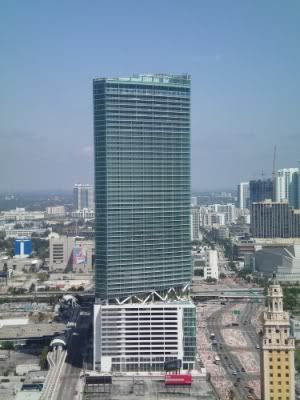
As many of you have already heard, a 60-unit bulk sale recently occurred at Marina Blue. Two local newspapers published articles about the deal earlier this week.
An investment group, under the name Welcome Bay LLC, paid slightly over $13M for the 60 condos. The transaction was recorded on December 24, 2008.

The 60 condos included in the Marina Blue bulk sale sold for an average price of $200 per square foot. Below, you will find the bulk condo sale separated as per the 60 recorded deeds. As many of you have discussed in a previous post about the Marina Blue bulk condo sale, it is important for everyone to realize that these are not retail prices. An individual cannot and will not be able to purchase condos at Marina Blue at these prices. The 60 condos below were part of package deal with prices that were distributed accordingly to arrive at the $200 per square foot average.
Correction: I just found out that there was an error in recording the deeds with the county. Each unit was sold for exactly $200 per square foot.
- Unit 411 – $169,000 – 845 SF – $200/SF
- Unit 610 – $169,000 – 845 SF – $200/SF
- Unit 703 – $196,400 – 982 SF – $200/SF
- Unit 810 – $169,000 – 845 SF – $200/SF
- Unit 911 – $169,000 – 845 SF – $200/SF
- Unit 1111 – $169,000 – 845 SF – $200/SF
- Unit 1511 – $169,000 – 845 SF – $200/SF
- Unit 1703 – $188,600 – 943 SF – $200/SF
- Unit 1801 – $263,000 – 1,315 SF – $200/SF
- Unit 1802 – $168,600 – 843 SF – $200/SF
- Unit 1812 – $263,600 – 1,318 SF – $200/SF
- Unit 1901 – $263,000 – 1,315 SF – $200/SF
- Unit 1906 – $189,600 – 948 SF – $200/SF
- Unit 2007 – $166,600 – 833 SF – $200/SF
- Unit 2009 – $264,600 – 1,323 SF – $200/SF
- Unit 2012 – $263,600 – 1,318 SF – $200/SF
- Unit 2104 – $241,600 – 1,208 SF – $200/SF
- Unit 2106 – $189,600 – 948 SF – $200/SF
- Unit 2202 – $168,600 – 843 SF – $200/SF
- Unit 2204 – $241,600 – 1,208 SF – $200/SF
- Unit 2312 – $263,600 – 1,318 SF – $200/SF
- Unit 2404 – $241,600 – 1,208 SF – $200/SF
- Unit 2503 – $188,600 – 943 SF – $200/SF
- Unit 2512 – $263,600 – 1,318 SF – $200/SF
- Unit 2709 – $264,600 – 1,323 SF – $200/SF
- Unit 2805 – $239,600 – 1,198 SF – $200/SF
- Unit 2903 – $188,600 – 943 SF – $200/SF
- Unit 3002 – $168,600 – 843 SF – $200/SF
- Unit 3201 – $263,000 – 1,315 SF – $200/SF
- Unit 3202 – $168,600 – 843 SF – $200/SF
- Unit 3304 – $241,600 – 1,208 SF – $200/SF
- Unit 3306 – $189,600 – 948 SF – $200/SF
- Unit 3401 – $263,000 – 1,315 SF – $200/SF
- Unit 3404 – $241,600 – 1,208 SF – $200/SF
- Unit 3405 – $239,600 – 1,198 SF – $200/SF
- Unit 3407 – $166,600 – 833 SF – $200/SF
- Unit 3412 – $263,600 – 1,318 SF – $200/SF
- Unit 3509 – $264,600 – 1,323 SF – $200/SF
- Unit 3704 – $241,600 – 1,208 SF – $200/SF
- Unit 3804 – $241,600 – 1,208 SF – $200/SF
- Unit 3901 – $263,000 – 1,315 SF – $200/SF
- Unit 3905 – $264,400 – 1,322 SF – $200/SF
- Unit 3909 – $264,600 – 1,323 SF – $200/SF
- Unit 4002 – $168,600 – 843 SF – $200/SF
- Unit 4105 – $239,600 – 1,198 SF – $200/SF
- Unit 4107 – $166,600 – 833 SF – $200/SF
- Unit 4204 – $241,600 – 1,208 SF – $200/SF
- Unit 4212 – $263,600 – 1,318 SF – $200/SF
- Unit 4303 – $188,600 – 943 SF – $200/SF
- Unit 4305 – $239,600 – 1,198 SF – $200/SF
- Unit 4307 – $166,600 – 833 SF – $200/SF
- Unit 4407 – $166,600 – 833 SF – $200/SF
- Unit 4409 – $264,600 – 1,323 SF – $200/SF
- Unit 4504 – $241,600 – 1,208 SF – $200/SF
- Unit 4506 – $189,600 – 948 SF – $200/SF
- Unit 4601 – $263,000 – 1,315 SF – $200/SF
- Unit 4705 – $239,600 – 1,198 SF – $200/SF
- Unit 4807 – $166,600 – 833 SF – $200/SF
- Unit 5006 – $189,600 – 948 SF – $200/SF
- Unit 5106 – $189,600 – 948 SF – $200/SF






oh man! What was it that someone said about people elbowing each other to buy at $300/sf in MB just one week ago? Pwned!!!!!
Will not get these prices? I wouldn’t be so sure of that lechuga
While I agree that individual buyers cannot get these prices, you have to assume that if the bulk buyer bought to sell (might be the case, at least for some units), getting 10-20% more in less than a year is a great return.
If this is the case, and you take a typical 2 BR unit ( 1,318 sf – $241,600 – $182/sf) that sells for 20% more than the bulk sale would still be a GREAT discount to other units ($220/sf, $290,000).
AJ, want to revise your estimate or still sticking with $350/sf?
These prices will continue to go down for 2009. Count on that. Wait until we get 10 of these bulk sales recorded.
Why would anybody purchase now? If I purchase now and let’s say I need to sell down the road, I now know that these guys can always undercut my price. Isn’t this a risk?
Has EWM stopped updating their ‘facts and trends’? The last info for condos in Dade county is from September and shows 25,116 condos for sale, 513 sold – a little over 4 YEAR SUPPLY.
Does anyone know where to get newer inventory data?
Lucas, your math is wrong. The price per square foot comes out to $200/SF on the button.
please correct this. Otherwise you are misinforming your clients.
Mark (not zilbert),
You’re correct. I made the change. I accidentally summed the average price per square foot total and divided by 60 instead of summing the purchase prices and dividing by the sum of the total square footage. Thanks for the heads up.
What are the odds that the bulk buyer bought more units than really desired, in order to get his hands on a number of premium units that he could not buy in bulk otherwise? AJ, you are good with the lines, can you possibly separate this bulk purchase into desirable vs average units? Over the next year, unless they are renting for nice profit, would be interesting to see how many of these average units the buyer unloads for minimal profit, so they can hold the desirables longer term and make a nice profit after a rebound, without tying up the entire $13m for years. Such a move, if it occurred, would not be good for the other condo owners looking to sell. just a thought on business motive.
Gables, With this particular project, that type of distinction is not very applicable being that every unit has a bay view.
gables,
The best line and my favorite line 08 is not there. When I first saw that line I saud, You got to be a Movie Star or a Drug Dealer to get a 08 line. It is stuff dreams are made of.
OK, some lines are decent if not the best. I wouldn’t mind line 09. I would challenge anyone to go to Welcome Bay and say “Dude, you paid $200/sf average, can I please have one of those prizes for $300/sf” and see what happens. May be the bulk buyer will laugh his butt off.
Hugo,
There is your answer. As I said before, when a guy on the street can purchase a water front/water view flat for $300-$350 in a open market, then talk to me. Until then don’t quote me a foreclosure or a bulk buy and tell me to change my position.
I am not rigid or stubborn. My position is not set in stone. I will revise my stand when things happen for real. But I do not believe MB flats can be had for $300-$350/sf.
AJ,
A bunch of guys just walked off the street and bought 60 water view units for $200 psf. This happened for real: Marina Blue flats were just had for $200 psf. Sorry.
Several well-funded investors looked at the deal, did due diligence and passed. So it appears that they believe as I do that $200 psf is not the bottom.
The MB investors would sell all of those units for $220 psf if they were to receive such an offer tomorrow–they would be stupid not to. If the market gets as bad as I suspect, in a few months, they’ll be selling for less than $200 psf.
The 1/1 units have 13′ wide living rooms. You enter the unit with the dishwasher and sink to your side. Hardly premium units.
I suspect in a few months the building will go from only allowing yearly rental contracts to monthly agreements. All they need is a flashing neon vacancy sign out front.
This will be a slow bleeding building.
If the doomsayers are so confident of their predictions, explain the 50 Biscayne paradox or just zip it.
Lucas,
Thanks for the recent rentals link. Absolute wealth of info. You are the first RE agent who is willing to part with privileged information. Thanks.
I am sure Good things will come your way as there are plenty of grateful people here.
To temper the praise, there is one thing that your site lacks. I have to go to a couple of other sites to get this info. It is imperative that you add this to make your site complete and a one stop Miami RE exchange (hope I’m not being too pushy):
FlOOR PLANS!
Who is talking about rents going down?
Leases signed in the past month in 1800 Club:
1. A 1 BR flat signed a lease on Dec 31st for $1700
2. A 2 BR flat signed a lease on Dec 12th for $2400
3. A 3 BR flat signed a lease on Nov 15th for $3500
All these lease dates are way way after the meltdown, turmoil and job losses. And leases are signed with in a week unlike sales which have a month or two gestation periods. So the market butchery must have been heavily weighing on the minds of these renters while they were signing these leases. It did not affect them anyway.
Guys are using dubious bulk sales to buttress their arguments. How can you counter this with real people renting real flats from individuals. This is despite the fact that individual owners have to compete with the 1800 developer who is renting some of his 30% (140) units too and thankfully the developers units are actually priced mostly higher or same as the other units owned by individuals.
And to that guy who calls him realist, and all those who keep saying that other bulk buyers have passed up on the 60 unit MB deal, here is some dose of reality:
Everyone is quoting some no name no fame investor by the name Arnaud Karsenti, who leads an opportunity fund in Miami, said he looked at the Marinablue portfolio but decided to pass.
This wise guy also said ““The problem with the downtown/Brickell area is that real estate taxes and the maintenance costs alone are generally equal or higher than the rent payments,” said Karsenti, a principal with 13th Floor Investments. ”
Wrong. Dead wrong. Sheer ignorance or an outright lie.
Add the Maint + Taxes and every unit in MB can be rented for more than that sum generating positive cash flow after buying them up in bulk and all cash.
This same genius, “Although he passed on Marinablue, Karsenti and partner Robert Suris recently bought 107 condos, townhouses and single-family homes in Homestead.”
Homestead!!!!!!!!! 90% of that town is on sale and virtually no one lives there or want to live there.
The guy screwed up. Now he is regretting that he should have bought MB and not in Homestead. In any case he spent 6.4 Mil for the homestead deal and maybe he does not have 13 Mil required for the MB deal. So he is badmouthing a passed golden opportunity.
Do I hear Sour Grapes?
So the next time you guys say that some vulture funds passed on this deal, tell me who it is. I will believe it when you give me a name. But there are none.
AJ, You said that you don’t believe Marina Blue flats could be had for 300-350/sf. But when I check the recent sales Lucas lists for MB it shows that one of the 3 listed sales was at 307.98/sf (unit 3701).
This site is AMAZING ,Lucas you’ve done it again!!!KEEP UP THIS WONDERFUL WORK.
AJ,
Those rental quotes are a little misleading. The previous several leases were at or under $1500 for the 1B. And the 2B and 3B appear to be HUGE appartments-pretty good bargains when you check out price per sq ft. Not sure if you would consider them a standard 2B, although you know the building far better than myself. I would not hold my breath on rental rates hanging tough. A review of several other buildings with more transactions does show a decrease over the past year.
Just a guess, but by summer I think many new buildings in the area will offer 1B $1100-1600 and 2B $1600-2100. This will bring rents better in line with incomes and similar to costs in other cities. Curious to see what the bulk buyers rent at.
Agree, the addition of rental info is GREAT! Gives one a bit more insight into the direction a building may be headed. Get a feel for prices as well as number of units under rental-great for guessing at stability of the building. Be forewarned, however, the numbers are not complete. For instance, I just started a new lease on my unit at a 20% discount to previous lease, but it is not listed in my building stats. So there are some hidden numbers at play which we cannot see in Lucas’ numbers.
Can someone please point me in the right direction? I do not see the “recent rentals” link!
click on view all miami condos at top of the page
Lucas
you’re beyond wrong. no, i can’t go to the developer and say give me one unit for 200 sq/ft please. i can however, squeeze the individual unit holder to get the best price possible. and if he’s a stubborn one, insisting on his 300-400 sq ft (which no f%^cking bank will lend to you on to purchase in any event), then i’ll talk to the bank once they foreclose on his ass.
seriously, for all of you that think bulk sales/foreclosures won’t effect pricing going forward, you’re playing checkers, not chess.
AJ,
This Miami condo renter (and homeowner elsewhere) is paying much less than advertised rental rates. Much lower than rates advertised on Craigslist and everywhere else. I suspect Renter Tom is paying well below-advertised rental rates. Dumb money pays full price. Dumb money exists in every market.
Markets move in fits and starts and it’s often difficult to discern macro trends without the perspective of hindsight. But the trend is here and it’s downward. To paraphrase William Gibson, the deflationary future is here. It’s just not widely distributed yet.
Before you bought in Miami, you were warned several times not to buy because prices had further to fall. As I pointed out then, readers of this blog will not need to know how much you paid to know that you got a bad deal. I think you now know that you made a bad buying decision so it’s downright inconsiderate of you to try to lead the gullible down the same path to financial ruin.
what does this mean to my investment at MB???
I paid a whole lot more!!!
Who can I sue!!!??
How can they get away with this?
MB, I think the best you can do is just hope that prices for individual sales don’t fall to this level. Unfortunately you can’t sue someone for making a bad investment decision.
MB
it means you’re underwater. as for your rights, you don’t have an action in tort nor do you have a contract with the developer obligating it to sell other units for a particular price. in short, you’re up a particularly noxious river with no paddle to boot. such is the way of miami condo investing.
Realist Bob,
In the heady days 05-06, the Right Wing Extremists (RE agents, Developers, Mortgage Brokers etc) scared the shit out of everyone – It’s now or never. They told stories, lies, inane statistics and opinions – God is not making anymore land etc. Millions of people believed them and they also succumbed to their own greed too.
I was a moderationist (If there is such a word). I was crowing back in winter 2004 that this is headed for a major disaster when I saw 5% price gains per month! Except for a few housing bubble blogs, no one seemed to cared about what I said. Come 2008 and I was proved right.
Now the Left Wing Extremists (LWE Housing Bears on this blog and others with interest to see the housing market collapse) are doing exactly the same thing what the right wingers did then. Using scare tactics, irrelevant statistics, economic-job data to scare the people into not buying.
Again I am a moderationist here. I am telling people not to get carried away but such scare mongering. Just the way people went one extreme in 05-06, I am cautioning them not to go the other extreme in 09-10. I am not telling anyone to commit economic suicide, on the contrary, If you read all my previous posts I have cautioned the people and told them to keep their eyes open for deals, unlike the LWE who are telling people that there is a pot of gold at the end of the rainbow (December 2009 or later in 2010).
Now let us say, there was a great foreclosure deal in a choice building and line and someone got influenced by all this talk and passed it up waiting for something better to come along. This person is actually looking for a place of his own. Now 2009 has passed and he/she realized that the foreclosure opportunity was the best deal they had. Then what?
All those people who are jumping with joy due to this Bulk sale have absolutely no idea that this is actually going to strengthen MB just like 50 Biscayne or 1800 Club and not make its values go down. Here is why.
Listen up and pay attention:
The first rule in RE or any other commodity business is to keep the values up or steady, take the inventory or supply off the market. This is exactly what has happened here.
1. In 50 Biscayne, by selling off 120 units to a bulk buyer, the developer has paid off the banks and the building is now 100% sold.
2. In 1800 club, even though the developers hold 139 units (29%) they have paid off the banks and own the units out right and are not discounting any unit either for rent or for sale.
3. In MB, Hyperion sold 60 units in Bulk to Welcome Bay. The developers paid off the banks. The building is now 90% sold. The developers only hold 10% and I will bet they will employ the exact same strategy as the 1800 developer, release them one by one to retail buyers with no discounts.
OK in all the 3 above buildings we have the flats held by 3 different entities.
1) Developer 2) A bulk Buyer 3) individuals
1. Developers: Having paid off the construction loan and satisfied all liens, they are free to rent these or sell these at their convenience and choosing. No fire sales or dumpings.
2. Bulk Buyers: Usually financially viable companies. Bought the flats for 50 cents on the dollar paying all cash. No mortgage on the units. Will rent the units, generating +ve cash flow even after paying the taxes and the maintenance until they can sell it off to retail buyers at their choosing and convenience.
3. Individual Owners: Most of the buildings have 60-70% individual owners. These people are either wealthy, who paid cash to buy them at closing or people with good credit and solid history, otherwise there is no way in hell these owners were able to close in 2008 by borrowing money from the bank.
Individual investors who booked the flat on borrowed money who never would have qualified for a loan anyway already walked off the deposits. They are not even in the picture.
So all the flats in the above 3 buildings are held by financially well off (relatively speaking) Developers, Investment funds and Individual owners. The buildings are considered 100% sold and have no liens on them and every flat paying their share of maintenance! What else does one expect in a building? In fact in the 469 unit 1800 Club, there is only (one and only) one unit which is 3 months behind in the maintenance. Everyone else is current.
That is exactly the reason why you will never find a deal in 50 Biscayne or 1800 Club unless it is a foreclosure or distress sale and that is also the reason why you will not find a deal in MB. In fact I challenged people to explain me the 50 Biscayne Paradox but no one ever did. As they do not know. On one hand I explain the reasons for my conclusions, and all I get from others is just a stuck record repetition of “the market is going down”.
OK, I will throw a bone to the bears. When a building such as above which sold about 2/3rd (66%) to individual owners, the developers will sell just enough in a bulk sale to pay off the bank and will hold the rest for themselves for future sale and profit. These buildings are all but closed for retail discounts.
On the other hand, buildings which have not reached that critical 66% point will not be able to pull off this trick and these are the buildings that are in trouble. That is where you can expect some turmoil and bank take overs and auctions etc. So if Jorge can come up with enough money to ward off the banks, he can keep ICON. But what about Infinity etc. That is a big question. And Epic and Paramount and Marquis too. 900 Biscayne also to some extent is in trouble with its low closing rate.
So to answer jcrime,
The bulk sale in MB will not affect the prices in MB. However if a bank takes over 900 or Marquis and auctions off the flats there, that might have an impact on MB prices. That is a big If. No one knows what will happen to 900 or Marquis. So I do not wish to overly speculate here and wait and see. But this particular sale in MB will actually strengthen the building and its finances.
MB,
I hope I answered you Q. You don’t have to sue anyone. Your investment is not going anywhere. Just chill.
I think this bulk deal is great for everyone. Marina Blue will now be partically sold. The HOA wont have to raise the price or have any special assesments. 50 Biscayne is a stable building thanks to the bulk buy (although Jorge Perez still sort of owns them). You guys have to realize that this is 60 less units for sale. These investors are not stupid, they don’t just shell out 13M without thinking they are going to have good returns. The investment game has risks and rewards and I think this is a great long-term investment. Most people on this blog are extremly cynical and just complain about everything and think the world is coming to an end. Every expert who knows anything about RE knows that they go through cycles, this happens to be a big downturn but I don’t see them lossing buying at $200sq/ft in that building. Especially in the long-run.
you guys are nuts! what makes you think you know what will happen in these buildings in the next 3 years? To say $300/sf is the min you will see in any building is nothing but a wild guess. Someone buying 60 units at $200/sf may help stabilize MB short term but it can’t be good for the general miami condo market because the big money will use that as a benchmark when considering other bulk sales. How can it be good for the poor slob that paid $400+/sf? What exactly do you think will happen to those 60 units? If I was an investor in that building w/ negative monthly cashflow that would be my que to cut losses. What hopes do I have of ever making good on that investment now that someone is controlling such a large block and his cost basis is less than half of mine. That means he can sell those units at a substantial profit before I can even think of breaking even. MB sorry but, you out the game man!
Affordability, and supply and demand. It’s not that complicated.
Miami condos still cost too much compared to mean incomes, and we have a massive multi-year supply (somewhere north of 50k units). Economics always wins, fellas.
And to those thinking that bulk sales like the one at MB will help, guess again. The buyer is just a well-financed flipper; those units are still on the market. Supply and demand. Pretty simple.
PS, if AJ’s not underwater yet, it’s only because his down payment was enormous. Bad Idea Jeans. No offense AJ, but you’ve forfeited the right to advise me on real estate investing.
For the record, listed rental rates are meaningless. I pay 23% less than the listed rate. Could have driven it down a bit more too I suspect….
Bulk buyers turn units into rentals……. banks see buildings with high amount of rentals as invesment properties……investment properties are charged higher intrest rates………..higher interest rates means less people can qualify for a certain purchase price………more buyers look elsewhere. That’s your downward spiral. Takes time, but in the end the original owners are screwed.
Rt,
I rented my unit outside of the MLS system for more than the average list price. It won’t show on the compiled list either. So cases like mine neutralizes cases like yours.
Makes me think,
you said “How can it be good for the poor slob that paid $400+/sf? “.
It is great for him. Now he bought into a stable building.
Tell me something. The guy who bought stocks when the Dow was 12000 was better off than the guy who bought it at 14000. Similarly the guys who bought at Dow 10,000 or 8,000 is better off than the guy who bought it at 12,000. So friggin what? That’s life. If you knew when the Dow would be 8K or 10K or 12K , you wouldn’t be on this blog anyway, you would be sipping champagne on board your private yacht off Cote D’Azure . In any case the guy who bought it at 10000 saw his stocks decline to 8000 but eventually they will go back up to where it was and more.
When it comes to condos in Miami, stability is the name of the game. Get in a building with stable finances and ride over the next two years and you will be OK. In fact I wrote a letter to the board of my SOBE building urging them to take very strict action on maintenance defaulters. I wrote ” Initiate foreclosure action and sell off the properties to half price if necessary to solid individuals. I would rather see the flats owned by fiscally able individuals rather than worry that someone is going to buy a flat for half price than what I paid. I am not worried about a notional property value. It will go back up to where it is when things settle down. But the need of the hour is to have a stable building with good finances”
So any and all the owners of the new buildings who have hit a 2/3rd closing rate but not 100% yet, should enthusiastically cheer and encourage bulk sales to put your building just over the stability edge. It is a matter to celebrate, not be sad about. If the bulk buyer got it for half price than what you paid, so what? He has the money power and muscle to negotiate. You don’t. Walmart can negotiate with an entire corporation or even a country to their advantage. Lesser mortals can’t. So don’t even compare.
After adding commissions, administrative costs, all and sundry, the welcome bay price must be at least $225/sf. I will bet, you will not see any of these back on the market for one red cent less than $300/sf. If Welcome Bay has the financial wherewithal to stay the course for the next 2 years, I will not be surprised if they will sell these flats for $400/sf in 2011-2012 and beyond. That in fact maybe their strategy. Not bad, 100% return on investment in 3-4 years. Go back and refer to my older posts. Come 2013, there will be no new flats left to buy. Any new buildings will take 4-5 years to come on line. 2008-2009 meltdown will be a long forgotten distant memory.
AJ
i don’t know what to say to you. first, i don’t agree with your groupings of folks. there’s far more strung out investors in these buildings that actually closed than you care to acknowledge. second, the simple fact is, if you’re an individual unit holder, unless you find someone willing to do an all cash offer, you will not be able to find a buyer who will be able to get financing at 300 sq ft or more for a prolonged period of time. you either keep on holding even if you don’t want to (and shell out cash to hold) or give up. if you do the former, you’re gonna have to hold for several years (at least five) to even breakeven. how many people are willing to hold on for this time just to breakeven? how many people are willing to be a landlord for that period of time? h ow many people are willing to forgo other money making opportunities just to breakeven in several years?
what’s your 50 biscayne paradox?
Raffi
just because someone bought the units doesn’t mean the HOA won’t go up. as soon as the developer turns over, the HOA pops up for all of these buildings. there’s no reason why this wouldn’t happen here.
AJ
the problem with your stock analogy is that you fail to realize i can liquidate instantaneously and more importantly, don’t have to pay several hundred dollars a month in hoa and taxes. thus, my breakeven point is far easier to reach.
AJ, truly amazing arguments. Entertaining, but so far off the mark, I don’t know where to start… anyone who acts on your “logic” deserves whatever happens to their pocketbook… natural selection has its uses.
I don’t care what anyone says, if you paid $400/sq. foot, and now units are going for $200/sq. foot (bulk sale or not), that’s gotta be a shitty feeling.
jcrimes, 50 Biscayne paradox:
Bayfront flats $400-$500/sf
West facing flats $350-$400/sf. No discounts, no deals.
Of course I agree with your #35. I know stocks are more liquid. I used this analogy to assure MB not to lose heart over the evil dance of the LWEs (left wing extremists).
I am front in line to wish you to get your river view loft in Epic for $300/sf or less.
I don’t know where some of these guys are getting the idea that I don’t want you all to benefit. By all means, if you can buy a flat for less than what I paid for , I will be happy for you. But don’t keep shedding tears for me assuming I’m under water or what ever when you don’t know jack. LOL. Just do not resort to crooked practices in the pursuit of your goals. That will make you no less wretched than the low life RE agent/mortgage broker/developer nexus of yore.
Realist Bob,
You sound exactly like Renter Tom, including the moniker!
MB,
There are 60, fully arms-length, publicly-recorded comps in MarinaBlue that say you are seriously underwater. No sane lender will ignore those comps so you will not be able to sell at your full price (or any price above $200 psf) to any buyer who requires substantial mortgage financing. Additionally, MarinaBlue will have so many renters and non-occupant owners that most lenders will not lend to any potential buyer at virtually any price.
You can sue but you almost certainly will not win. You can try a short sale and hope for the best… or you can walk, and get a good rental or purchase deal on a different unit, and hope your lender will not come after you for a deficiency judgment before the statute of limitations is up… or you can walk and file bankruptcy after bk laws are changed to allow judicial cramdowns… or you can stay put and take a huge hit every month for years to come secure in the knowledge that there hundreds of others in similar straits. Let us know what you decide.
No, AJ, I am not Renter Tom. Notice that I did not rail against Obama because of the bk law changes that are sure to come under an Obama administration… changes which will allow judges to modify mortgage contracts to the detriment of lenders. I believe such changes are necessary because they will help the market reach bottom sooner.
Those who have been paying attention will have observed that Citi now says they support changes to the bk laws to allow mortgage cramdowns. I suspect Citi looking for legal cover that will allow them to modify mortgages originated by their toxic acquisition (Countrywide Mortgage) thereby screwing RMBS holders and avoiding potential blowback (lawsuits) in the future. Jcrimes will probably have an opinion on this.
AJ thinks buyers can “ride out” this trend for a couple of years and be alright – simply because they’re in a “stable” building.
AJ, my man, you will not see 400/sq ft. in places like MB for many many years. You and I know that those prices were the result of a false market — a speculative bubble built on (1) nonexistent/lax lending standards; (2) temporarily low supply; and (3) MSM-fueled hype.
Every one of those three factors is working against you right now. They’re killing you. Credit is incredibly tight. Supply is literally at an all-time high (and still growing: hi, Icon Brickell, how are you?). And the hype is, shall we say, dampened.
Indeed, people are losing their jobs. The very system of derivative swaps and packaged securities that got us here is no more. 401k’s have been decimated. Hell, even Florida’s demographics are working against you.
So no, you and other condo buyers like you wont ride this wave out. You wont see 2006 prices for 10 years, at the very least. I’m not a pessimist. I’m not a “left-winger.” I’m a realist. And you lost this particular gamble. Better luck next time.
Sorry Citi did not acquire Countrywide; the smarties at Bank of America did.
AJ,
One major assumption you are implying is that the bulk buyers can rent all of their units at positive cash flow. Under normal circumstances a 10% vacancy rate may be expected. In these times in Miami, you can bet the rate will be higher, or the rental rates will be much lower. This will put significant pressure on individual buyers expecting to rent and cover costs on their units. With many buyers, I would bet the carrying cost of mortgage, HOA and taxes will push $4k per month on a 2B-when the rental rate will be closer to $2k per month. The question will be how long can the individuals suffer this bleeding? Some may have pockets deep enough to do so-wait long enough and you will most likely avoid a loss on paper. But many buyers will not make it i am afraid-this could be an assumption i am wrong on, but bad conditions will probably exist for at least 24 months. This means many investors must come up with about $48k over two years and then hope for a rebound in price.
Bulk buyers will push rental rates down because they would rather have smaller margins but every unit filled, if possible. Again this will be hard on the individual with a large mortgage trying to cover costs.
AJ,
from what I’ve read on this forum about you, I think you are one of the good guys. Please don’t take it as a personal attack when I tell you that you have no f***king clue what you are talking about when it comes to investing and financial matters. You are probably one of those stock market investors who bought all those high flying nasdaq stocks in 2001 still waiting for them to come back. Didn’t you say you are eating $3oo/mo on one of your condo investment an investment that by the way is rapidly depreciating. At this point you are not investing you are speculating. I invest in housing and I’m not buying anything unless it can return 10-15%. Most RE investors will tell you don’t mess with rentals unless it bring you at least $300+ a month. The hassle of dealing with renters aren’t worth less than that. Your problem is you fell in love with your investments and can’t see you bought into a market bubble. Here is a best case scenerio for you. Lets say the banks remaining after this fallout goes back to lending like it was 2005 with no doc loans and the market for those condos go back up to bubble levels again in another 5 years. Where does that leave you and your invesgment ? how much money would you have lost by then?
You seem to live in a theoretical world. In real world Investing there are a few principles that investors use which you may want to familiarize yourself with. Princibles such as “ROI (return on investment)”, “risk/reward pofile” , “diversification”,”don’t throw good money afrer bad money “, “cut your losses quickly so you can live to fight another day”, “investors sentiment”. “don’t figh the market, let the market be your friend”,”speculators” and “stop loss” ,”haircut” and “never fall in love with an investment” and oh yeah one of the main ones “murhpy’s law”
Just face it AJ , you made a tipical neophite investor mistake. You don’t know when to get out of a bad investment and you are making it worst by doubling down and buying more of a bad thing. Look at the risk/ reward profile of your investments , if it is possible the risk is financial ruin then the reward however great is not worth it because you have to remember you allways want to live to fight another day. Also all your money can’t be in any one or two type of investments because of murphy’s law.
get educated man, read a couple of books. There is on need to be clueless in this day and age especially since you have so much money invested.
makes me think, well said!
From the movie The Patriot with Mel Gibson: “Aim small, miss small.” This also applies to investing in turbulent (risky) markets.
Another movie: know when to fold.
AJ, regarding your post #33….man oh man oh man. I don’t even know if a response is necessary since your post speaks for itself….nuts! Or should we start calling you “AJ the Shill”?
You simply can not compare buying real estate to buying stocks….they are two different animals. Why not compare it to buying pickles? A condo is “consumed” through remodeling, repairs, replacements, taxes, HOA fees, etc. It can’t really change, expand its income, grow, etc. At most it can make a small profit in rents each year and maybe appreciate at or around inflation in an attempt to preserve wealth (that is, if you didn’t over pay….that is KEY in real estate, what you put in up front since that affects your rate of return and the price appreciation if there is one). Note, the income tax code causes a capital allocation distortion causing an over investment in real estate eventually causing an over supply and less appreciation and lower rents in the medium to long term…even more so if the short term tax benefits end.
Needless to say, your fantasy rents….with no records in the mls are kinda funny…
By the way, I am absolutely against having the fed govt or courts take down principal. It is a private contract so they should stay out, period. The most the fed govt can do is allow people to refin into something like 5% 30-40 year mortgages by offering these mortgage rates on the open market…..and that is it, period. No cram downs! Don’t you realize that if cram downs are allowed, mortgage interest rates will have to rise in response to this new uncertainty and risk?
jcrimes, I just wanted to point out that the HOA will be stable, no sudden increases year over year, the place will be well maintained, etc.
I’m sure these investors did their due diligence, I’m sure they calculated their carrying costs, market situation, etc. They are probably investing long-term i.e. 10-15yrs. If you look at it from that perspective I don’t see how they can lose.
Equity markets around the world have fallen 40%, give or take. These are very liquid markets-at least in the US. Newspapers report that the US RE market has fallen anywhere from 10% to 20% from peak, across the country. Local areas such as Miami RE have been reported to drop 40% to 50% from peak. Similar drop to the equity markets.
Difference is, the RE market is quite illiquid. Foreclosures and bulk buyers are actually buying at these discounts. But there is a false hope that individual buyers will be unable to capitalize on these discounts-citing the MLS listing for nondistressed units. If a unit must go on the market today, it will sell at the discounted price, no matter who is holding the property. As stated previously, the major reason so many nondistressed properties are listed at a high level is because the sellers cannot afford to sell the property at a loss. It was bought on leverage. Stocks typically are not bought with the same leverage, and that is why the equity market has corrected so fast. It is able to.
The big question is what happens to the overleveraged condo holder over the next couple of years. Will the government allow principal to be written down? Will banks foreclose, or continue to stall the foreclosure process and avoid taking back the property and all of its pitfalls? Units are selling at the 40% discount-in large volume. Units are not selling at preconstruction prices-or very few. You judge where we will equilibrate at.
I have noticed that banks have not been foreclosing on properties the last couple of months. I am suspecting it is because of the holiday season and the slow resale markets at this time of year. They don’t wan to pay HOA dues/maint cost while properties sit on their books. I believe foreclosure activity will pick up in the coming months for spring selling season. Look for deeper discounts on those condos in miami.
Raffi, cash is so dear right now, and risk so high, that no investor in their right mind would invest in an illiquid asset with a 10 to 15-year term to payback. IMHO, if they are investing long term in this market, they are not frightfully smart.
And even investors in their right minds do stupid things when they fail to realize that the environment has changed completely. Let’s not forget that Buffet, Goldman Sachs, Bear Stearns, Lehman Bros all did their due diligence and lost big time.
makes me think – There were moratoriums on forclosing by Freddie and Fannie that were recently extended to the end of January…madness, pure madness.
As visionary well described some of you guys, amateur economists, my hats off to you! Even the Nobel Laureate Paul Krugman does not have a bigger ego than you. Legends in your own minds, yeah. If you are all so smart why didn’t you guys buy a flat or two in 2001-2003 and sell it off in 05-06? Or buy oil futures in ’07 and sell them in Summer 2008? Or sell all your stocks before the Lehman implosion, At least in this case you guys had no fig leaf to cover your private parts as you seem to know exactly what is going to happen to all these investment banks which are exposed to the toxic paper and the resultant blood bath in the markets.
You are the last people in the room who can sermonize others.
Personally, i did not have the cash in 2001 to buy much of anything. But by 2007 i did have some assets, and moved to about 90% cash before the end of 2007. At the time, was not worried about recessions and such, but simple overvaluation and bubbles in the stock market. Did not move into RE, particularly Miami, because by then it was obviously a bubble. I never predicted the meltdown we are seeing in markets-although i did predict a pretty significant correction. But as time evolves, my view has changed very bearish. Not proud of that and would rather be bullish, but prospects over the next few years are dim. I cannot say that my moves have been good for generating profit-never owned significantly appreciating assets. But my view has certainly allowed me to maintain capital in a depreciating environment, which is the best i can wish for at this point.
Correction, my baseball card collection appreciated greatly into the early 90’s, then crashed spectacularly into the mid 90’s! My first introduction into the bubble and burst economy i guess. all that allowance money gone to waste 🙂
I’m 100% invested in beanie babies.
Raffi
under that scenario, i don’t necessarily disagree. however, (1) i’ve dealt with some investment groups before who were well over their head and our now being foreclosed on thus, today’s well helled investor can well be tomorrow’s loser and (2) if you’re going on a 10/15 year window, wouldn’t an s&p fund be just as good an investment? if condos turn around then certainly stocks should as well
AJ
those epic days might be getting closer. i’m getting some better offers from insiders.
finally, was at mondarian this weekend. frankly, with FB already on-line, the W coming soon and the gavensvort already rolling, i just don’t see why anyone would want to spend their week in south beach staying on west ave. sure, west ave is a great place to be when you’re living on the beach, but for a vacation?
gables, you are definitely not one of those I have referred to as an amateur economist! You are one of the few guys along with JL and jcrimes with a well balanced outlook. You express opinions but do not claim gospel status. You guys are of the opposing view point but I love reading your posts. Many posts are spot on.
“Or buy oil futures in ‘07 and sell them in Summer 2008? ”
Actually AJ I did exactly that!
Good for you.
Realist
BoA is a big player on the servicing side, although I’m not sure if they do a lot of special servicing work (which is what a lot of this would be). I’m not sure what Citi does on the servicing side of RMBS. Anyway, the problem with the bankruptcy cramdown provision is not necessarily the fact that it allows a debtor to rewrite a contract (bankruptcy already allows for that in other instances) but rather, determining the appropriate value. It’s hard to see how readjustment today won’t mean that the propery will be underwater a few months down the line. Not to mention, if folks actually jumped aboard and significant filings took place, it could accelerate RMBS losses which could require further recapitalization of fin’l institutions. Not sure how realistic the latter point is…
AJ – w.r.t. #53. I did and made millions…all cap gain too. As I have mentioned, I have some real estate experience. Bought ’03 and sold ’06. Not bad eh? By the way, I am not some amateur, I have the educational background and experience to prove it…and when you have 3-5 years supply of housing, it doesn’t even take a cross-eyed idiot to see that home prices will decline. AJ, when you finally move up to the level of cross-eyed idiot, let me know. Combine that with the severe lending restrictions and accelerating foreclosure numbers, it is a no brainer. It really isn’t even worth the effort anymore to address whether home prices in the Miami area are going to decline or not in 2009. Supply is at an all time high while demand is at an all time low due to tightened lending standards and buyer hesitation to buy large deflating assets. By the way, your pretentious praises on some posters really doesn’t fool anyone….no one cares nor does anyone seek or need your approvals.
jcrimes,
i agree with you. my biggest concern with the principal write down approach, aside from the moral hazard inherent in such a move, is that it further removes transparency on condo valuations. when a bunch of mortgages are written down, essentially you are writing down the sale price of the condo. but how is that info transferred to the marketplace? this will further keep people on the sidelines because of a lack of information to judge value. i buy because i want my own place to live AND the place is of value compared to others. both of these criteria must be met for me to make a purchase. seems like the government wants us to behave foolishly with respect to our own finances in order to improve the collective lot of the entire economy. i used to wonder how an educated country like ours made such silly decisions that resulted in the great depression. i am seeing first hand how even “sophisticated” economies and governments can make similar blunders in real time (both bush and obama blunders that is).
Gables, I’m the same boat as you. Not looking to flip, rent out, or for any other investment purpose other than when I go to sell in 5-10 years after living there and enjoying the place. I want something that will keep me happy until the point that I’m ready to upgrade because I have a family or something. Do you have any timeframe as to when you might be buying? I’ll likely be putting in an offer soon, within the next month probably.
DJ,
A unique situation may have me place an offer this week-odds are about 50/50. Otherwise, my plan is probably some time this summer unless a cannot pass up opportunity presents itself. I am quite fearful of the economy over the next few years-jobs, deflation, stability, etc. If the Miami RE market cannot stabilize to something realistic, or show that it will head towards affordability in the next year, i will reassess the situation. This may mean leaving Miami for a more stable and affordable environment for jobs, standard of living, etc. I dont want to leave but I do need better reasons to stay. I need better confidence that in 5 years if i need to sell, it will not lead to financial ruin.
jcrimes, Gables.
My point is that huge losses already exist at financial institutions, they simply have yet to be recognized. Our government has done everything possible to enable the hiding of bank losses. The longer we refuse to recognize losses and excise the bad loans from the books, the longer most markets will remain in the doldrums.
Judges have cramdown experience in other areas, including commercial mortgages and investor real estate loans; experience which has been employed without overly distorting the marketplace. BK judges currently handle very complex cases involving cramdowns and a wide variety of corporate, government, and personal assets, across multiple domestic jurisdictions. Why will they not be able to employ that experience and do the same with respect owner-occupied mortgages?
There will be many, many bankruptcies of all types (personal, corporate, municipal…) and lenders of all stripes will lose their shirts. But when the dust clears, people will go back to lending and borrowing, as always. Contracts will be adjusted to recognize risks which had always existed but hitherto had not been recognized. Financial models will be modified and stress tested to reflect reality and the potential for “black swan” events. Financial risk pricing will change, up or down, depending on whether the market rewards or punishes realistic lending standards. But life will go on.
Bankruptcy judges don’t run for election so they will do what needs to be done to force banks et al to recognize losses and make adjustments, or crash and burn. This is a major reason I believe that Detroit’s automakers should be forced into bankruptcy; a course of action which will help eliminate overly rich executive and union pay packages and punish bondholders and investors (speculators) who made dumb decisions, choosing to back bureaucratic, sclerotic, hidebound, money-losing, self-entitled operations that had no prospect of surviving, let alone thriving, without government support.
The sooner we can reach the bottom, the sooner normality will resume.
Here’s a primer on mortgage cramdowns:
http://mortgage.freedomblogging.com/2008/03/15/are-mortgage-cramdowns-really-so-bad/
This blog is turning out to be funny… Everyone against AJ. AJ, what does it feel to be alone in the world?
You have everyone on this blog along with almost every vulture fund and hedge fund in the country saying that these are still not good deals, but yet you seem to feel you are right. Wonder why that is.
I have been running numbers on many of these deals for a while and I can tell you I am not buying now. Wait until you see more bulk buys and we’ll talk.
And as for the 50 Biscayne “paradox”, the sale was just a change of hands between Related to get out of the construction loan. In my opinion, this was not an arms length transaction and should not reflect on pricing. Just wait and see.
Subject : Bulk sale was made at $200/sf, when the owners in the same building paid more than $400/sf.
Group 1 (AJ and like-minded if any) : It is good for the owners.
Group 2 (Renter Tom and perhaps all others) : It is bad for the owners.
Comment : Both groups are Correct, except that that have wrong perception about each others comment. Why? With those unsold apts the owners would have been in a worse situation!!! It at least gives some stability for short term. In any case, the individuals might get this price (or close to it) in near future. So real sufferers are those owners who wanted to sale in near future.
Look at the current economy as the multiplier effect working in reverse or fractional reserve banking working in reverse or both. Then you’ll understand a couple of reasons we are far from a bottom.
Hugo,
I agree regarding the bulk buys. Not sure how independent those purchases have been, or will be in the future. I get a feeling they are maneuvers to avoid foreclosure to a bank, and make it so if the developer (or his bulk fund) ultimately retains the property outright or with a writedown through foreclosure on himself. Just seems to me to be something sneaky going on. Otherwise, why not unload the units to the buying public at similar prices-you will sell out immediately. I can bet that if MB had sold at $200 sf ft to the public, they would have created a frenzy which sold out the building. Seems to me they are going to try to keep it in the family instead.
Ray #69 – When did I say the bulk sale was bad for the owners? I believe my opinion was very balanced…to the point that AJ thought I was agreeing with him (that still won’t get him an invite to use my guest bedroom for three months! LOL). It does take some units off the market and hopefully those are dues paying units. They will most likely be rental units but hopefully better managed than those single units owned by floplords. The new price based on comps probably will be a bit above $200/s.f., maybe $250/s.f. It simply confirms that the asset is much less. But again and again and again….these unit were NOT sold to END users. Eventually they will go BACK on the market for sale… Only when home inventories drop below around 8 months supply for END users….not short/medium term “investors”, flippers, etc. will the bottom be near. By then all the enthusiasm for residential real estate will have been so beaten out of the market that really only end users or landlords making a 10% return will be interested in buying so why not wait for the actual bottom and the start of the recovery…..which will be slow and stagnant anyway and possibly last for years….to buy on the way up? It is the safer play.
I agree with Ray in #69, understand AJ’s point and am frankly surprised at the ferocity of the comments going after AJ. Both arguments center largely around timeline and motivation. If you did something speculative, are having trouble keeping up with cash flow and were depending on selling for a profit in the near-term, you’re going to be in a lot of trouble. Most of the arguments against AJ seem to come from that viewpoint, or assume all the individual buyers are in that situation. This might be common, but its never 100% of the cases out there.
However, AJ is correct is you take the long-term viewpoint and aren’t motivated for capital gains. Real estate is an income investment and all professional investors (note developers are a different animal) approach it as a cashflow game. Any capital gains from sales are either heavily discounted (because of the uncertainty of the future) in their financial models or are treated as a nice-to-have. In this sense, if there’s not a transaction in the immediate future, the value of the building is largely irrelevant as long as the income is where they need it to be when they bought in, at the prices they paid, and the cost structure is managed appropriately. Sam Zell made billions by playing the income game, buying distressed buildings at less than replacement cost in a environment just like this. You guys should read up on Dallas/Houston in the 80s and the fortunes that were made, lost and then made again there.
As long as the financials of the investment are sound (cost structure first, then income), the investment should be fine and a lender will provide money. Note that I’m talking about large investments & commercial lenders, as in bulk deals. Individuals will have a harder time. In the case of these bulk deals, the single biggest uncertainty around future costs is the building’s HOA having financial difficulty. Next is insurance. Having the building near 100% sold means the building’s built-out cash flow will be close to 100% , greatly reducing the building’s operating risk. The potential for special assessments or increases in dues to cover the building’s cost structure goes down significantly. Lenders will eventually recognize this and financing for individuals will return. Anybody in the building who doesn’t need to sell and isn’t hemorrhaging cash benefits greatly. If you’re living in the building, as your home (the original intent of the condo), the bulk sale reduces your overall risk and makes your home more secure. If you like your place, don’t need to sell and your cost structure (mortgage, etc.) makes sense for you, what do you really care about the interim value of your home? Go out to your pool, catch some rays and enjoy the weather.
For those of you out there with a different viewpoint, you shouldn’t bash AJ… he’s right about what he’s saying…. just probably playing a different game.
Doc you have no idea what youre talking about. I’m all about the cash flow. Aj is cashflow negative. There are no deals that are cashflow positive. Just a bunch of suckers getting eaten alive. Also in regards to you closing rate… 35% of jade owners are in foreclosure and not paying the hoa, yet the building is 100% closed. You know nothing dr nick riviera.
Are there alternative uses for these condos?
dormitory? hotel?
also – if you pay cash and the rent covers your maintenance and taxes, aren’t you by defination cash flow positive?
I am going away on vacation for 6 weeks to get some sun, surf and sand 🙂 (but not to Miami though 🙁 )
So if you don’t hear from me or only sporadically don’t assume that I got run over by a bus like the last time LoL. You all take care and have fun.
#74, I think you’re misinterpreting what I’m saying, but thanks for making my earlier point. I’m obviously looking at a different game than you are. Rather than deciding in a moment’s notice than I’m an idiot, why not try to find out what I see that you don’t and then ask yourself which is better.
BTW, Lucas… great blog. I swing in and out periodically because I know I can find great information and great discussions here. Thanks for standing your ground through all that recent unpleasantness and keeping this forum going. Correct, accurate and timely information is what will eventually take Miami out of these problems and I think you’re showing great leadership.
Wondee, as long as those are your only major expenses and a little less for some routine maintenance (paint, carpet as needed, etc.), then yes… you’re cash flow positive.
Wondee and Doc, you are only cash flow positive if the rent also covers what you could make on a conservative investment of your cash used to buy the condo. The $200k cash used to buy the place can make money on interest, and if you do not cover the interest in rent, you are not cash flow positive.
I was told today that Clinique La Prairie spa at Ten Museum Park will open next week as long as they pass all inspections by the city.
Doctor – Wrong diagnosis. The problem is very simple, the condo prices are too high to be cash flow positive with any reasonable and even unreasonbly low cost of capital. Basically, in REAL dollar terms you’d be losing money each year which makes it a bad investment. Why take on the risk when you can have a certain 4%-5% return for doing nothing? I really don’t understand all the financial gymnastics that people play to justify the high purchase prices….the number one rule in real estate is and always has been what price you pay for the asset, period. Pretty simple. If you have rents of $2K/month and buy the place for $50K you will do well but if you buy the place for $500K you will do poorly. Nothing else really matters except the price of the asset…then you have to look at the “other prices” that are essentially financed each year such as taxes and condo fees.
Here would be an interesting twist….I wonder if any city govt will ever allow you to prepay 30 years of property taxes up front at a discounted amount….now that would be interesting……..instead of paying $10K/year you pay $150K now and can’t be assessed any property taxes for the next 30 years….you could even finance it in a mortgage…. Now that would really complicate matters…
Doc, I hear what you are saying but from my understanding of the situation in miami is that many of these people used price appreciation as their main objective for buying these condos. How many of these investors used cashflow modeling to buy those condos? Zero, because if they did they would know there is no way in hell they can cashflow posititive with those numbers. I have never known HOA and TAXES to go down they almost always go up and we are not even talking special assesment. The truth is when buying real estate I almost always ignore future appreciation in my modeling I buying strictly for cashflow (putting your money to work so you don’ t have to) any appreciation above inflation is an unexpected bonus. Also you are forgeting about human sentiment. You can say I’m buying this condo because I want to live there for the next 10-15 years but life happens and plans can change like that. You think you are buying for 10 years min. then all of a sudden you meet a nice lady at the bar downstairs you are just interested in hooking up but next thing you know you are digging this chick and she is really liking you. 6 months passes by and she is at you condo all the damn time but you still enjoy her company. 8months now and now she is officially moved in and the pressure is on for a wedding cause her clock is ticking. She is a nice girl you are not likely to do any better than her out there so you acquiesce. Next thing you know there is a weddin planed and you are talking abou moving to the suburbs because she wants to have kids and be close to her family. Life happens, so if you are young and single you can’t realisticly plan to live somewhere for the next 10-15 years, that’s a long time when you are 30 ish. Let’s not forget those early mid-life crisis that happens around the mid to early 30’s when you realize you are getting old, your job sucks, you are laden with dept becausse of that stupid condo you shouldn’t have bought and you haven’t done anything meaningful in your life. Now you want to get out of miami and move to LA to try your hands at acting.
Those things happens!
Gables, regarding #79, by “covers what you could could make on a conservative investment of your cash used to buy the condo”, I’m assuming you’re referring to including a comparison to an alternative investment at a risk-free rate. I’ve seen that used as a comparison point to evaluate the attractiveness of an investment compared to alternative potential investments, and to calculate cost of capital (k). I’ve never seen the potential other uses of capital included into the accounting of the building’s cashflow, as its irrelevant what your capital could be doing in other places once its invested into the building. Accounting-wise, if your income is greater than your expenses, then your cash flow is positive.
Tom,
I think you just made my point…. profitability is totally determined by the entry point, which is why the professional investors did the bulk sale at $200/ft and not $400/ft, and reduced their cost structure by probably not using much financing. They take on the risk for two reasons: 1) you can’t be in the market if you’re out of it, and 2) because of the compensation structure of their funds. They get paid on a percentage of invested assets, not committed assets. If they don’t use the funds, they don’t get paid on it.
MMT… yes, they happen, but not to professional portfolio managers because they’re not living in their investments. We are. My analysis was from the bulk-sale and professional investor perspective…thus proper investment analysis and a basic understanding of accounting. And to give a different perspective to this discussion, which is very individual investor/speculator focused. I just want to contribute to Lucas’s blog by showing people there are other games in this stadium than the one they’re playing, and not everybody’s on the same page.
Wondee, no you are not cash flow positive at that point. Do you visit the property(Gas), do you advertise when the tennant moves out, do you keet the lights on when the property is vacant, what about painting and cleaning? As I said before you don’t want to own rental property just to break even or cash flow just a few hundred dollars a month. It is just too much risk for too little reward (risk/reward profile) you will never get ahead at that rate. When you buy an investment property the tennant is suppose to subsidize your lifestyle, you are not suppose to subsidize theirs. The only way you should buy a property with no cashflow is if you buy at a huge discount to current market value and you plan to flip it in a short timeframe.
“The only way you should buy a property with no cashflow is if you buy at a huge discount to current market value and you plan to flip it in a short timeframe.”
Isnt that what this bulk sale is all about?
Doctor – Sorry, but why would anyone want to be in this market? The asset price is deflating with Fortune predicting 23% decline in 2009. You would have to get it a fantastic discount for an investment to reduce the downside risk. $200/s.f. doesn’t seem bad if you lived there, but as an investment I just don’t know…..and a lot of investors must agree since I don’t see a lot of them taking the bait to date. Meager rents is one thing, but hasn’t been able to make up for the major price declines that’s for sure. The way to go forward is with patience and extreme caution.
Doctor (#83) if an investor does not consider cost of capital then he should soon be parted from his money. Why dont you buy a condo with your cash, i’ll pay the rent which covers HOA and taxes, and in a few years i’ll move out and you can keep or sell the condo for yourself. You got to invest the cash and I’ll keep you cash flow positive. Sounds like a great deal for me-you willing to match it? Maybe you should consider the cost of your capital tied up over that amount time after all. That $300k in cash you set aside could have made you $45k over the five year period at 3%. Investing and accounting should not be confused.
Hello. Interested in what the board thinks of the following valuation exercise for a couple of Miami condos. Please share your thoughts and let me know if I am making any incorrect assumptions or have wrong numbers, as I am not a professional RE investor.
Up front assumptions:
– Units I used below are probably not the “best”/”most desirable”/”most awesome”/whatever per building. I just went through the short sale/foreclosure list and picked two out
– I’m assuming taxes at 2.5% based on purchase price
– 5 year investment horizon
– For rent information, I went through Lucas’ site, took the last three months of rent/square foot, dropped outliers and took an average of that. Then adjusted the rent amount by the average time the unit was on the market for, and assumed that the average tenant stays for two years (i.e. if a building sees units on the market for 60 days on average, I divide this number by 730 and use this to adjust the “average” rent earned)
– Assuming property taxes, HOA fees, and rents stay constant for all five years
– Am NOT including any sort of tax deductions from interest rates
– Assuming 80% LTV, with a 5.50% traditional 30 year mortgage
– Using two buildings: Jade to represent “premium”, “unique” buildings, and Vue to represent “lower-level”, “cheap” and less desirable building
Case #1 – Jade
There’s a short sale unit at Jade listing for $499,000 for a 2/2 with 1,529 square feet.
Average rent at Jade has been $2.25/sqft, with 2/2 units having remained on the market for 86 days on average before being rented out. 2.25 * 1,529 * 88.19% occupancy gives me an average rental rate of $3,045.73.
Carry costs are as follows: $2,266.61 from mortgage, $1,039.58 in monthly property taxes, and HOA fees of $0.75/sqft, or $1,146.75. Total monthly costs: $4,452.95.
The negative monthly carry is $1,407.21 or $16,885.56 annually. This is a negative carry of 16.92% of your initial $99,800 down payment.
If the unit appreciates 3.50% per year for the next 5 years, your IRR will be 4.89%. This is roughly 3.30% over a 5 year US Treasury, and close to what a 5 year AA rated bond yields.
Removing leverage gives you a 2.07% positive ANNUAL yield on the unit. This is slightly better than what you can get in a money market fund. Less than what most bank CDs will pay.
Case #2 – Vue
Another 2/2 listing for $200,000 with 1,322 sqft.
Average rent has been $1.35/sqft with units being on the market for 82.5 days (slightly better occupancy at 88.70%). Average rent = $1,559.55.
Carry costs: Mortgage is $908.46, property taxes come out to $416.67/month, and HOA at $0.60/sqft is $793.20 (sounds high), for a grand total of $2,118.33.
The negative monthly carry is $558.78, or $6,705.32. Startlingly similar 16.76% compared to the $40,000 down payment.
The IRR calculation is the same. A 3.50% appreciation gives you a 5.01% return over 5 years. This is closer to what a low AA rated issuer might return.
Again, removing leverage gives you an annual yield of 2.10%.
*******
My take-aways are as follows:
– If you are an INVESTOR, the numbers just don’t seem to square up, even at short-sale/foreclosure prices. I think the numbers give an indication of where the market is going.
– For the numbers to be cash-flow positive (typically what a RE investor looks for, I am told), the Jade unit has to be priced at $300,000 (just under $200/sqft), and the Vue unit has to go for $100,000 (around $76/sqft)
Either rents have to shoot up, or prices still have a lot further to fall. Maybe the market really diverges, and premium buildings don’t fall (much) more, but anything that is not really top of the line looks set for a big fall.
*******
I welcome any thoughts/suggestions/comments.
2pence – Simple. Rents are tied to incomes (mostly local incomes but not so much for seasonal rentals) also rents are based on a pay as you go or cash based economy. Incomes are not going to increase in the next two years to any extent and may actually go down as unemployment increases and overtime and regular hours are cut back. There is slack in the labor market in all sectors of the economy and so the downward pressure on wages will be broad based (thanks to the credit bubble collapse that shifted the demand curve down). As such. wages will not shoot up any time soon… The only solution to this mess is to let the home prices fall and to renegotiate existing mortgages into 30-50 year fixed rate mortgages at low interest rates. Anything else is wasteful and futile.
RT – my thoughts exactly. Even setting aside “the real world” (i.e. economy sucks, Miami has no income base, market is vastly overbuilt), it seems that prices have a LONG way to go down. The Jade unit, for instance, has to fall another 40% (more or less) whilst the Vue unit has to give up half its value for either of these to make much sense as investments.
2pence,
i wont dispute your numbers, although i did not look at everything in detail. Most of my numbers have been for residence, not investment. For low end buildings like vue, if an end user purchased at $125 sf you would probably break even as living expenses go. For high end like jade, i have anticipated around $250 sf would keep you above water, assuming you were willing to pay the premium of a luxury building. Prices above those levels run a risk of losing money when sold in 5 years or so. If i were buying as a investment rental, i would guess your numbers are probably close to what I would expect for cash flow positive.
others argue prices will not get this low, especially in high end units. that is possible, if there are enough high end buyers who care more about their view and location than cash. and those buyers do exist. just not sure if we have enough to keep all the so called luxury buildings afloat. the marginal luxury buildings may end up crashing-but could provide a great buy in the long run come summertime.
one interesting thing is that the buildings should first reach price levels which are more desirable to residents than investors. if this occurs it will obviously help the stability of the building and would be good for the long term.
2pence, you leave out the increase in hoa and taxes. You can’t assume a 3.5% property appreciation and not an increase in those costs. What about 0.5% individual unit maintenance? My landlord has to fix a new thing weekly or I withhold rent (which is my right). What about special assessments? Currently bulk utility contracts mean you HAVE to pay the water and cable bill for any owner who is in default. What about tv new pool cover law? That’s 300k right there -$1000 is your share. You guys leave no money for the sh*t happens fund.
What about the fact that the state and county uses homeowners as their piggy bank. So far fee increases include a firefighter fee. What about the new homeowners 6 insurance law . How much does that cost? What about falling rents? Draw a linear regression through any building’s rent. Rent is down 12 cents per square foot in the last 12 months.
What about the crazy tenant tax? My family owns 20 homes in new York. Always. At least 1 tenant being evicted. What about when they decide to cause 15k of damage to steal 50 dollars worth of copper?
Both jade 35% foreclosure and vue (literally looks 20 years old) owners are being slammed by special assesments
Also, for mls listed rents – 8.3 to 10% goes to real estate agent
One thing I have learned recently is that in Florida the landlord must pay Florida Sales Tax on “transient accommodations”…that is, accommodations of six months or less. Wow, I had never heard of such a thing before. So that 6% (or more depending on county?) must be factored into the costs in additional to the litany of others… This applies to condos that are rented out. Note, the Florida sales tax does not apply for written bone fide lease over 6 months of continuous rental. Kind of a screwy law to some extent …. did go to the actual statute but did read the Dept of Rev’s website …. should be defined as # of days, not months since months vary in # of days. Oh well, just thought I’d through that out there too.
Haha. Yes, it looks like I definitely left out the crazy tenant tax. The point of my semi-back of the envelope calculations is that Miami’s condo market only appears to be headed further south. I think that judging by the very cursory numbers I produced, it seems that today’s short sales and foreclosures should be the ceiling of tomorrow’s prices. None of these condos make sense at anything above the levels I saw above, even as emotional purchases.
The point of my analysis was that it almost seems like there is no way to ever make money as a Miami condo landlord except by betting that there will be capital appreciation. This is hardly conventional thinking among real estate investors who buy properties based on (positive) cash flow.
Looks like there is much more downside to come.
Miami Herald:
”The situation is unprecedented,” said David Denslow, an economist at the University of Florida. “Our ordinary models don’t explain what’s going on. All those ordinary models aren’t working, and now everybody is groping. No one knows what’s really salient.”
– As I have previously posted, this is NOT a cyclical recession that is merely part of the business/economy cycle. Rather it is a structural recession caused by the credit bubble collapse shifting the demand curve downward. It is a shift down in demand, not a down part of the cycle. Big difference. Structural investment that matched the supply trend line to the demand trend line will need to shift downward too which will be very painful and cause a 5-10% pullback in GDP….and at the same time, the slack between the old supply trend line and new supply trend line will need to be absorbed making this doubly painful for the approx 24 months that it will take to absorb the slack in supply…..we are still piling up autos for example…..at least housing starts had already plummeted (need even fewer starts) and autos were late to begin to adjust. Fortunately the “just in time inventory” systems will keep this from being a 10 year problem. As I had previously posted….you can pretty much write off 2009…..
2pence
Your analysis of view is very similar to one we had prepared when Lucas posted a $99,000 unit for sale. Our estimate was $75/sf which is right at where you have it. The small modification to your numbers is depreciation which help the numbers a bit, but when you make all the other changes that “Cash flow ” suggested, you get to this numnber.
I’ll let AJ buy these for now. Cash is king now. Sit back and enjoy the next 6 months, I promise you they will be ugly.
$75/sf is what I’ve been saying for a while.
–
Gables, you said, “For low end buildings like vue, if an end user purchased at $125 sf you would probably break even as living expenses go. ”
I’ve run the numbers, by hand and with the New York Times calculator.
At $125 it’s still a no-go, and that is NOT counting the following: special assessments, recession/depression, prices continuing to go down, of course, all these are interrelated.
2pence,
Thanks for taking the time to run and show the numbers.
Muir,
I do not disagree with you. My preference would be to buy at $75 sf and assure myself that I can at least break even. But $125 sf in one of those units probably will not cause me significant financial harm in the long run IF i plan on living in the unit myself (cannot see how this could ever happen at $300 sf). As others have stated in this blog, there is a price to be paid for the stability and satisfaction of owning my own property. Not saying this is always the prudent financial decision, but at some point people will move away from strictly number crunching and account for those emotional issues which are hard to price in. When this occurs you know you are getting close to a bottom in the pricing. Homeowners will buy at a price above the investors break even point. Their goal will be not to make money, but avoid losing much cash while living in the location of their choice. But I am not saying we are there yet-still falling towards affordability.
“Not saying this is always the prudent financial decision, but at some point people will move away from strictly number crunching and account for those emotional issues which are hard to price in. ”
–
Not disagreeing either Gables but I think you will see a lot of emotion this year.
I have had more than just a couple of people tell me how dissatisfied they are owning and adding that they too wish they were renting as I am. And, they were very emotional when they told me this.
For me emotions and money are interrelated. There is peace of mind in renting, yet I could buy at the right price.
Not to disparage the cash flow analysis approach but any comparison of renting vs. owning as a personal investment is really dependent upon assumptions about future appreciation. I have run the numbers a lot as well in a number of different models and looking at the current cash flow is just a starting point.
From an analytical perspective, the decision on whether to rent or buy at a given level of cash flow is really a judgment about future inflation. Since the cost of housing is fundamentally linked to incomes, it automatically adjusts along with wages. The fact that housing prices have been measured to appreciate at .4% above the rate of inflation over the long term demonstrates that inflation is by far the largest component of the nominal appreciation in prices (i.e. the average inflation was 3.8% from 1950-2007, much larger than the .4% real rate of appreciation).
A purchase locks in the nominal value of the property via the mortgage. The HOA and taxes components of the owner cash flow generally appreciate with the same rate as rents. But the real value of the mortgage payment depreciates over time. So when 2pence analyzes the current cash flow of a property, the break even point is correctly $75/sq. ft. On the other hand, gables’ $125/sq. ft. as being break even for an owner may also be correct assuming a particular holding period and a particular future rate of inflation. So it may not be an emotional decision at all to buy a property with a current negative cash flow if you foresee yourself holding the property for a sufficient time and expect a sufficient rate of inflation.
In terms of analyzing the investment value of property against alternative asset classes, the rate of inflation also plays a central role. A purchase is inherently a leveraged bet on future inflation. Assuming 20% down, the return on the initial investment is 5 times the rate of inflation. This also assumes that the cost of renting and owning are neutral at the time of purchase. An initial negative carry would lower the rate of return but the inherent leverage in the mortgage could still make ownership compare favorably to bonds or even stocks as an alternative investment. When considering the opportunity cost on the down payment many analysts ignore the fact that such rates of leverage are unavailable in other asset classes. (Of course leverage is a double-edged sword and could prove disastrous in the case of lower than expected inflation)
All that being said, I am not arguing that property values will not fall further. In fact, I remain pretty pessimistic on the local housing market. First off, the current negative carry would only break even under unexpectedly high rates of inflation in the next decade. Moreover, the US is on the brink of a Japan style deflationary trap and it really isn’t clear that current government policies will be any better at extricating the economy than the Japanese solutions were. Unless the government really starts printing money and delivering it in a way that increases the velocity of circulation, I doubt there will be enough inflationary pressure to offset the current deflationary headwinds.
And those are just the macroeconomic factors, which are exacerbated by the local market conditions in Miami: a massive supply overhang in condos and a rising unemployment rate, the latter contributing to declining household incomes and rates of household formation. With such an imbalance in supply and demand it is not inconceivable that the Miami condo market will reach an inversion in cash flow, where the current cost of ownership is sufficiently below rents to amortize for systemically high vacancy rates for several years to come.
Petronius – Of course, as you point out inflation is a big assumption that everyone made but proved to be wrong. There is MASSIVE deflation in housing. Oddly, such booms and busts in housing are not new…this one just got to be the biggest is all so why people made the assumption that housing always goes up is curious and not faithful to the past. In housing there are two parts (1) annual rents (or imputed rents as the case may be for owner occupied dwellings) over annual costs and (2) asset price (up or down). In Miami, both rents and asset price are upside down…by around 50% from peak! Rent at half the price of owning AND not have the albatross of a declining asset!!! It is a no brainer. I probably saved $240K by renting if you throw in the declining asset price.
There are select deals out there…but more are coming every day as inventories pile up and sales remain very low. The number of new foreclosures vastly exceed new sales each month….hello. There is no rush and if someone can buy something at 1/2 the peak price (as long as that peak wasn’t one of those massive fraud numbers) and you plan to live there for 5, maybe at least 10, years then go for it. But no rush, more opportunities are coming every day.
I just want to know how 2pence gets the credit for $75 psft when I’ve been saying this like since the first day I was here?
Nah, who cares? I give him the credit.
Petronius, you must be an economist, your analysis made no sense at all.
🙂
HELP!!
I have a friend who has a deposit at Infinity and is being asked to close. Of course, he wants to drop the contract but asked me what to do with the deposit ($75K or so)
As i understand it, it was a HUD filing, so he is entitled to the 25% back. The question is, how does this process work? Detail would be great!
Also, if the building took more than the contract stated for completion, can he ask for his whole deposit? If so, any recommended attorneys?
THANK YOU!
Hugo P – As I understand it, the lack of that filing hasn’t made developers give back the deposits in court. The courts have sided with the developers….
Call me when Marina Blue is at $100 psf.
Only a matter of time………
Although not quite a consensus, it appears quite obvious that these condos are not good investments. I am new to the city and would like to pick the board’s brain about any good locations for small multi-unit buildings (duplexes or fourplexes). I personally like the area around NW 135 ave. and Biscayne blvd. I am from Houston where the cost of living is very low, so I am still trying to wrap my head around the idea that rents are pretty expensive for not very good apartments.
Also has anyone ever used or heard about NACA?? It seems almost too good to be true. They offer a no money down fixed rate mortgage at 4.625% for first time ho?me buyers. It seems that there mission is to promote home ownership (sound familiar) to low income people so they will take pride in their houses and then the neighborhoods will not be so slummy? It don’t have enough info about local rents but it seems that with a mortgage so low there should be some decent cash flow buildings somewhere in the city, provided that the owner knows how to run things.
Hugo and Renter Tom — you’re talking about the Interstate Land Sales Full Disclosure Act (ILSA or ILSFDA). It requires certain filings, but there are numerous exceptions, most of which the developers knew about and purposefully triggered. So the courts have been siding with the developers, quite simply, because the developers are usually correct.
But results vary. See a lawyer if you want competent advice.
Muir – not trying to take any credit here, especially if you’ve made a previous prediction of $75/sqft.
What I found interesting from my (crude) analysis is how equally bad both a “desirable”/”unique” building and a “less desirable” building appear. The negative carry is the same amount (close to 17% if you are financing), and both RELY on capital appreciation to make some sort of money at the end. Certainly not a “safe” investment.
Petronius – Not sure how you get to 5 times the rate of inflation on a real estate purchase. In my examples, I assumed a nominal annual increase in the value of the property to be 3.5% (roughly historical US inflation). In both cases, the *nominal* IRR is lower than the unit’s rate of appreciation.
I think here the issue might be leverage. Maybe there is money to be made by playing around with the capital structure, although this is just thinking out loud at the moment.
I will run a few numbers when I have time and post my results.
2pence,
i completely agree that the major issue right now regarding profitability in condos is capital appreciation. I just do not see it happening anytime soon. In fact we are in the midst of depreciation which is why so few condos are selling. we got into this mess because all of the casual RE investors of the past decade expected profit from capital appreciation and not cash flow. when buying off of leverage, if you get no appreciation you are in trouble. hence our current predicament.
my fear is that every owner is holding off selling, going deeper into debt with the hopes of breaking even in a year or two. this will not happen and those owners will lose their property anyway. the problem is many of the buildings will suffer lack of maintenance over this time period, hurting their value. many buildings in brickell and downtown will get worn down very quickly, which is sad because if we could just let the market reach equilibrium quickly, buyers like myself will step in and keep these buildings in much better condition.
Anyone know if there are any charts showing how much $$$ was invested in residential real estate each year for the last few decades? It would be interesting to see a chart that would illustrate the over investment and misallocation of capital….
Renter Tom, moretroops:
Thank you.
Now, I didn’t say that the developer didn’t do the filing, in fact, he did.
I understand that once a developer makes this filing and takes over 2 years to complete you are entitled to get the 25% back. I believe lara or la la talked about this a while back.
Any help?
2pence,
🙂
Just messin….
–
Here’s my own example on costs:
My rent $1650
–
Owner Lehman Brothers receiver costs:
HOA $750
Taxes $620
Total $1370
–
“Profit” for receivership $280
–
Even at a PE of 30 it’s just a tad over 100K
–
I love where I live though
2pence,
I was speaking in the abstract about the impact of inflation on a real estate investment and the inherent leverage in a mortgage.
If you have $100,000 in cash and use it as a down payment to buy a $500,000 home, that is a 5 to 1 leverage rate relative to inflation. If inflation is 3.5% for the next 5 years then the value of the home becomes $594,000 (ignoring any non-inflationary appreciation potential). That would be a gain of $94,000 on an initial investment of $100,000, effectively leveraging the 3.5% rate of inflation to a ~14% annual return.
In comparison, the same $100,000 invested in bonds or stocks would not have the same inherent leverage. A margin account would allow at most a 2 to 1 leverage ratio. One could push this further of course with leveraged ETFs or futures trading but at a substantial increase in risk. Nor are these bets on something as simple as the rate of inflation but on more complicated factors, like interest rates, business cycles or company specific outcomes.
One of the reasons that the “conventional wisdom” had developed that housing is always a good investment is that for the last 60 years the government has maintained a mildly inflationary environment. And since bank mortgages allow for substantially higher leverage that other investment classes, real estate investing has been relatively consistent as a leveraged play on the rate of inflation (which has been implicitly guaranteed by the government’s monetary policy).
Now the first example that I give for the rate of return is based on parity between rents and the cost of owning. As you point out for properties currently on the market, there is a negative carry of around 17% (or worse if one adjusts for factors others have pointed out. Also I think your assumption about taxes is flawed since current assessments lag purchase price and therefore the tax burden in the first few years of ownership will be higher than 2.5%). The 17% negative carry more than offsets the 14% return from the leveraged inflation bet.
But my other point was that the assumptions for investment horizon, inflation rate and the analysis of current cash flow are interlinked. Working off your calculations and assumptions for the unit in Jade, it takes 26 years to reach the break even point for owning vs. renting (NB: My calculations include some assumptions about income taxes that may vary substantially by individual situation and will undoubtedly be subject to change in the years to come). However, if inflation rises to 5% per year rather than 3.5% then the break even point is only 8 years away. On the other hand, if average inflation drops to 2%, it becomes impossible to break even on a $500k purchase price during the 30 year life of a mortgage. In an environment of 2% inflation, the break even value on the Jade unit becomes just under $270,000 (~176 per sq. ft.). If inflation drops further so does the fair value of real estate. From this perspective, it is pretty clear why deflation is so bad for the real estate market.
this blog is so much more pleasant to read without AJ’s mindless chatter.
My rule of thumb for rentals is monthly rent should equal 1% of the purchase price. $100,000 property should rent for $1,000 but Miami taxes and HOA’s are double other areas of the state so purchase price has to be much lower. Wouldn’t replacement cost for MB be more than $200 sq. ft.??
AJ
Aj, I hate to be the one to do this to you but, didnt you around 4-6 months ago state that in January of 09 that you would finally tell everyone here what you paid for your 2 bdrm unit @ 1800? I believe you and rentertom even had a bet of some kind???
Muir,
I appreciate your comments. Where do you live? Building? 1/1? General area? Any info would be helpful. best, shwin
Back on the inflation v. real estate issue, I’m not convinced that RE is a good “investment” for a homeowner. If real appreciation is only slightly above the nominal inflation rate, wouldn’t any “return” be eaten up by upkeep costs, wear and tear, etc…? I’m inclined to believe that a mortgage (for a homeowner) is nothing more than a way to force yourself to save money money every month by putting it away in something illiquid with low appreciation.
…this could also be because I have always been very bearish on owning a property, though…
*****
I re-ran my (simplistic numbers), and taking leverage out of the equation helps a lot. In this case, subtracting the mortgage payments leaves the investor with a positive yield of just over 2.00% (2.07% for Jade and 2.10% for Vue). This means if you have a 5 year holding period and prices don’t fall you might even (gulp!) make money!
I wouldn’t bet on it, but the (initial) analysis points to this.
The problem here is that it just seems like a very low rate of return for a risky, illiquid asset. Even in today’s low rate environment it just doesn’t seem like an efficient use of capital for an investor.
Question out loud for the board: is the problem with Miami real estate not so much an issue of $/sqft so much as upkeep costs/sqft?
Maintenance costs for many buildings seems very high. It seems as though every developer was trying to outdo each other by seeing who provides the most amenities (my building has a split-level gym, valet parking, movie theater, half a dozen lounge areas, pool, hot tub, sauna, etc…). How much “less desirable” would a clean, well-kept building really be in Miami, especially if one were able to actually (gasp!) afford it?
Just a thought…
shwin,
I live in a corner 2/2.
6 months ago the unit beneath mine was rented for $2100
I’d say $1900-2100 was the going rate for my line.
I’m in the 19th floor, 2 balconies.
Sorry, wont say building but the data I post I believe is valuable.
–
shwin, 2pence & Richard
Here’s a great calculator on rent vrs owning
http://www.nytimes.com/2007/04/10/business/2007_BUYRENT_GRAPHIC.html?_r=3&oref=slogin&oref=slogin
I set appreciation and rent increase both to zero and then plug numbers.
My post #117 is endlessly fascinating to people outside Miami, $1370 without a mortgage in the midst of a recession/depression is insane.
If anybody looks at a condo as an investment and then just tried to find it’s PE as you would a stock, you can arrive at a “price.”
It’s fascinating to me that it is so consistent: $75 psqf for a condo in SF for a pretty bad overpriced stock at a PE of 20 to 30.
Finally, whoever says, “Oh well, but your not taking into consideration that the market will rebound when you do your numbers….” Well, that’s true, I’m not. And those that do are speculating not investing.
Really, this is rather simple.
Here’s my real life data for the post above:
My rent $1650
–
Owner Lehman Brothers receiver costs:
HOA $750
Taxes $620
Total $1370
–
“Profit” for receivership $280
–
Even at a PE of 30 it’s just a tad over 100K
[notice my rent is $1650 and 6 months ago the unit beneath mine was $2100. My unit is brand spanking new, granite marble the usual]
2pence,
i have had the same question regarding the cost of amenities. my building is average, nothing spectacular. we have pool, small lounge, small gym, no valet. yet the HOA is still hovering near $0.75 sq ft-outrageous and keeping me from buying here. i really do not want forced to pay for a fancy gym, valet, commons and large pool that i never use and are only meant to impress others. a hoa that covers all of these items removes market forces that enforce upkeep and good service at the amenities. i cannot withdraw my money if i do not like the service. its like a mandatory 20% tip on food service. let me save on HOA and spend the cash at the gym of my choice. my preference is a nice, clean stable building with few frills and low HOA. these new building are the equivalent of the high priced SUV with all the options now sitting idly in the dealers lot.
The more comments I read, the more loudly I sing:
“Been spending all my life, livin’ in a renter’s paradise!”
It’s good to rent, fellas.
I also think insurance costs must be a fairly high (fixed) portion of HOA fees. I remember the HOA fees in the building I used to live in shot up 45% after hurricane Wilma due to a combination of increased insurance costs and repairs that had to be paid out of an underfunded budget.
*****
Insofar as renting v. owning, hopefully we should be saving the difference. 😉
In most condo buildings the association fee is Value of unit *0.001
For example an 86,000 dollar condo has an association fee of 86 dollars per moneth
125000 dollar condo has association fee of 125 a month etc.
I seriously cannot fathom how Miami condo’s get off charging 1,000 a month association fee. Unless you have a 1 million dollar unit that is just purely outrageous.
Another way of figuring out the HOA fee would be $0.10 per sqaure foot.
That is what 95% of the rest of the USA is paying. I have a hard time believing anyone would pay $0.75 a sqaure foot.
That is what people pay for rent up in Michigan, LMFAO!
2pence,
Just wanted to address the issue of whether real estate is a good “investment” for a homeowner. As I previously noted, the rate of appreciation is primarily driven by the rate of inflation, although at a substantial leverage ratio due to the way mortgages are structured. An inflation rate of 3.5% produces an annual return of 14%. This would be a real return of 10.5%.
Your question on the offset for upkeep and wear and tear is not completely applicable as the rate of appreciation that we have been talking about (.4% above inflation) uses the Case-Shiller methodology. This is a chain weighting of the sale prices for the same properties over time. It effectively incorporates depreciation into the subsequent sales price of the property.
Above and beyond the 10.5% rate of return that represents the leveraged trend rate of inflation, there will be an adjustment for the cost of carry. This was -16% in your calculations for some current units in Miami. However, depending on when a homeowner buys in the real estate market cycle, the carry adjustment might be less negative or even positive. Lets assume that the carry adjustment is 0% in the normal market environment (neither bubble nor slump).
Now whether this makes real estate a good “investment” can only be measured relative to other investment classes. Government bonds offer a real return of 1-2%. Higher yields require greater exposure to default risk. And real bond returns do not adjust well with an unexpected rise in inflation (unless you are invested in TIPS). In any case, a bond investment will have a lower return than housing because there is no inherent leverage as there is with a mortgage. A real return of 10.5% is a lot better than 1-2% on treasuries and 4-5% on investment grade corporates.
Comparing with stocks as an asset class is more difficult. The real return of the stock market is similar to that of housing over the very long term. Both stocks and housing are subject to booms and busts with varying frequency. There are periods where stocks outperform housing as an asset class and vice versa (1990s vs 1970s).
The real problems with housing as an “investment” are lack of scalability and lack of liquidity. The down payment for a particular property is fixed and one cannot easily scale that investment as with fixed-income or equity investments. If one scales by increasing the size of the cash investment that just reduces the effect of leverage and thus lowers the return. Lack of liquidity and high transaction costs also take away from some of the appeal as an investment class.
In addition to this comparison of the asset characteristics, there are also the tax treatment issues to consider. The tax code has made housing an even more favorable investment due to long-term capital gains rates and in the last decade the 500k exclusion.
I would agree with you that for many purchasing a home is a form of forced savings. But it is an inflation hedged, leveraged, tax-advantaged form of savings, making it a good investment under certain conditions. One of these conditions is that the imputed rent and actual rents are relatively close so the cost of carry is around 0 (certainly still not the case for many Miami properties). Another condition is that the investment horizon is long enough that neither the limited liquidity nor the transaction costs impair the rate of return. More complex factors to consider would also include future inflation expectations, potential stock market returns over the investment horizon and overall asset allocation (while the scalability of all the investment advantages of purchasing a home are limited, a judicious allocation to such an investment as part of a broader diversification strategy could be beneficial for its own sake).
I HAVE A FEELING A J is UNDERCOVER and using another ALIAS. What do you think??
Petronius – “The tax code has made housing an even more favorable investment due to long-term capital gains rates”
– I don’t think so. Housing, except the $500K exclusion for some owner-occupied housing, has no advantage than say long-term capital gains on stocks. Moreover, if it were ever leased, you have tax calculation complications (did you keep really good records?) with recapture of depreciation…
– While I appreciate you well written analysis, in real estate you make your money at the time of purchase and only at the time of purchase. There are two factors when purchasing: (1) Do I want to participate in this asset class? and (2) What price do I pay? If you say yes to #1 (which wasn’t even a question for 95% of the people during the bubble) then the next step is to buy it a low price since that will determine you IRR and appreciation going forward. Why complicate it?
– Also, you seem to focus on buying a piece of real estate for owner occupancy — that should be what people should do since being a landlord on one or scattered properties can be very time consuming and when you factor in those costs you might make more $$$ worry free by being a greeter at Wal-Mart.
RT-
With regard to tax treatment, all of the return in housing typically counts as a long-term capital gain (unless one flips in less than a year). With stocks there is the dividend potion of total return that has only had comparably preferential treatment in the last 8 years and will undoubtedly expire. And while it is possible to focus on individual stocks in such a way that all capital appreciation counts as long term, most people investing via mutual funds for example will have at least some portion as a short term capital gain distribution. I agree leasing adds further complications with depreciation and recapture. That is one of the reasons that I kept to the question is housing a good investment for the homeowner rather than the general question of investing to be a landlord.
I don’t fully agree with your statement about making money at the time of purchase. My whole point was to show the impact of inflation and deflation on the notion of “fair value”. What may seem a low value with a good IRR at a particular point of time when inflation is 3% would become a poor purchase in retrospect if the economy falls into a deflationary trap. The behavior of the Japanese real estate market over the last 17 years demonstrates the impact of deflation on property values. Your second question of “what price do I pay” is implicitly complicated by expectations of future inflation. Of course if inflation is very stable then the simpler methodology for valuation is just as valid.
I have focused on the issue of owner occupancy. I agree with your last point about being a landlord with scattered properties as being potentially inefficient. Aside from an owner-occupied property, I feel the risk and liquidity of real estate as an investment class are relatively unattractive. But there are enough positive factors in owner occupied housing (leveraged, tax-advantaged, inflation adjusted savings vehicle) that at the right price and for a someone with a stable investment horizon, it represents a good “investment” relative to bonds or stocks, at least up to the point that it can absorb enough capital as a further diversification mechanism.
For the sake of disclosure, I currently rent and do not own any property. And while I am interested in purchasing for the reasons outlined above at some point in the future, my target based on current fair value is around $150 per sq. ft. in the area that I am currently in. However, since the economy teeters on the edge of deflation, I will wait to see how the current economic situation resolves itself.
Renter Tom reminded me how sweet it was in Jan 07 when I got to keep my $250,000 tax free gain on my home sale. Renters do need to factor that in rent vs buy which will for sure happen if you buy now for less than replacement.
Petronius – I agree with your second to the last paragraph. With respect to mutual funds having some short-term cap gains, that is true in many managed funds, however there are tax managed funds and of course index funds with negligible short-term cap gains. Personally, I am against have short vs. long term cap gains differences but that requires cap gains tax rates to be at or near ordinary income tax rates. I for one see no reason to have different rates between cap gains and ordinary income tax rates either. Cap gains already has an inherent advantage as you don’t pay tax until sold/realized….hence with cap gains YOU decide when to be sell and when to be taxed AND you can hold accumulating tax free for years….hence cap gains have an advantage built in, no need to pile on with lower rates, nor do lower rates “unlock capital” since you would need to continuously lower rates to “unlock” them…..but those are more heady tax policy discussions for another blog.
I plan on continuing to be a “casual” buyer looking for where, what, and when to buy a home for myself. So far, renting has been fantastic so no rush.
the way to resolve the hoa issue is to move to a no frills building. there’s lots of new inventory on the beach where the hoa goes to keeping the building clean and insurance. sure, you’re looking at 300-400 months still, but at least you know (1) exactly where the cash is going and (b) that you won’t pull your hair when you don’t use the valet/pool/gym more than three times a year.
Ok, you’ll changed my mind.
Now is a great time to buy!
Guys,
when considering rental property it all about where you buy. Technically you should never sell a rental property if you buy it right and you will never have to deal with depreciation recapture and long term cap gains. There is such a thing as a 1031 exchange, you can exchange your way from a cheap rundow property all the way up to a beachfront mansion for your retirement years, when you die your kids inherit it where the cost basis is the market value at your death so they pay no taxes.
Of course the are some restrictions and it may take a lifetime to 1031 your way to that mansion.
lets face it most of americas wealthies people accumilated their wealth through real estate. Many won’t even touch the stock markets so to say Real Estate investment is not worth it is crazy. Tell that to all those property owners in NYC. If you bought a property for 40K in a decent neighborhood and put another 12K to fix it up then turn around and rent it to someone on section 8 (well screened) for $1100 a month that’s $1100 a month guaranteed for 12 months. Are you telling me that you would rather put your money into a CD? hell you could do a few of these and still come out better than working full time a wallmart.
makes me think – Traditionally, the wealthy STORED their wealth in real estate….esp. homes. They didn’t MAKE money in their own homes per se. Land development and construction are different animals…same with commercial and rentals. The wealthy had the capital and could take advantage of the leverage over time. The non-wealthy didn’t have the capital UNTIL the no money down, no doc mortgages came along to substantially participate in the real estate market. Just don’t confuse owning real estate with wealth CREATION. They were wealthy first, then bought….not bought and became wealthy.
I believe everyone should own real estate as their primary residence. I just think the past few years has been a bad time to buy. I think people should start looking to buy especiall begining this summer because properties are getting to the point where banks are just trying to move them off the books. Condo’s I am not a fan of because there is very little you can do to as an individual in a building 300 to control your expenses.
When you want to sell you are competing with 30 other sellers with a similar product and the guy downstairs and decide to list his apartment 30% below yours and there is not much you can do. A house you can spruce up the yard to improve curb appeal.
people should also diversify and buy stocks and bond even though I’ve taken a beating in my stock holdings and retirement funds. You have to be disciplined and hold multiple asset class. Stocks are down 40% since last year real estate is down 17% but I’m still cashflowing the same because rents have remained steady. Oh yeh, I’m still buying stocks and selling when S&P hits 900. This strategy seems to help offset the losses on core holdings.
Buy now or be priced out forever.
–
Ron Shuffield, president of Esslinger-Wooten-Maxwell Realtors says that “South Florida is working off of a totally new economic model than any of us have ever experienced in the past.” He predicts that a limited supply of land coupled with demand from baby boomers and foreigners will prolong the boom indefinitely.
“I just don’t think we have what it takes to prick the bubble,” said Diane C. Swonk, chief economist at Mesirow Financial in Chicago, who was an optimist during the 90’s. “I don’t think prices are going to fall, and I don’t think they’re even going to be flat.”
The Smart Money smiles and nods knowingly.
The Smart Money.
#140
Agreed 100%, I advocate buying or rather shoping for a home this summer because I think some banks will be desperate and if you have cash you can negotiate hard. Condo’s I don’t know about though, they are just too complicated.
Hi Lucas,
Great new thing on your blog. I love it. Recent rentals is something that I was looking for and I can say that they are very accurate since I saw all my units that have been rented and all figures are correct.
Thank you so much for your wonderful work
Lucas – I just saw the recent rentals added. Wow – that is very very helpful since it not only gives an indication of what the market is doing but also sales versus rentals in the building to see home many sales and/or rentals are occurring. Certainly something everyone should review before buying or renting. Very very helpful!!! Also, the unit I rented was listed and was accurate too.
Muir. Let me give you a clue about something in life.
In financial matters whenever you hear someone say something is indefinite (i.e. forever) or that “the economic model has changed” you run. You run like hell. You run, because you know the person who told you that is either clueless or morally corrupt and willing to do or say whatever he can to separate you from your money.
Money is like water Muir. It has certain basic properties that do not change. Shufield’s statement is laughable and the equivalent of saying ” I can make water boil at -10 degrees Celsius.
Not arguing that the next year or two is not the time to buy. It is. It is a once in a generation buying opportunity. It is just that Shuffield’s quote reminds me of the irresponsible “bubbles are for bathtubs” crowd.
h20
those that say the next one to two years is a once in a lifetime opportunity to buy are equally suspect.
Jcrimes
“those that say the next one to two years is a once in a lifetime opportunity to buy are equally suspect.”
Hardly.
Property values are down approximately 25-35% and expected to drop another 10-20% or more in the next two years. Tell me, “O wise one” (quotation marks denote sarcasm) if not in the next two years, when? What financial fundamentals do YOU use to determine when to buy?
Think you may be a perennial bear from buying at the top of the market.
What fundamentals are you using? You are just throwing out percentages like they mean something.
Supply continues to come on to the market as the pool of qualified buyers shrinks. Rent vs. sales prices. Sales prices are way too high compared to how much a unit can be rented for. If a unit can be rented for $2000 a month it should cost no more than 200k to buy, right now those units are selling for 350k. Historically South Florida supports average home prices of 3x average income which is 50k, we aren’t even close to that.
There really is no reason to guess when the bottom will happen. If its in the next 2 years or the next 5 you will have plenty of time to buy. Just wait for the metrics to return to historical norms.
Makes Me Think said: “There is such a thing as a 1031 exchange, you can exchange your way from a cheap rundow property all the way up to a beachfront mansion for your retirement years, when you die your kids inherit it where the cost basis is the market value at your death so they pay no taxes.”
You cannot use a 1031 Exchange in either the purchase or sale of your PRIMARY RESIDENCE. You can use your second home, commercial property, etc. to take advantage of Federal tax deferrals and a “step-up” for your heirs after you croak!
I agree with jcrimes in criticizing the idea of a once in a lifetime opportunity.
If you take a look at inflation adjusted housing values (Robert Shiller’s data), the value fluctuated in a very narrow range between 1947 and 1997. Purchasing at almost any point in that 50 year period was equivalent relative to purchasing power. The national averages of course hide larger local fluctuations but in all cases the real outlier is the bubble of the last decade.
We have still not corrected to those long term levels that were stable for the previous 50 years (neither nationally, nor in Miami specifically). And we are quite likely to over correct below the average level due to local supply conditions, economic turmoil and a permanent change in financing conditions.
thank goodness for the never-ending waves of baby-boomers and foreigners looking to snap up poorly-built Miami condos, with close access to Mary Brickell Village and not a whole hell of a lot else. (hope they’re bringing their non-existent mortgage financing, too.) LMAO!!!
You guys debating when is time to buy is silly. Anytime is the right time to buy it depends on the deal you can negotiate for yourself. You have to agree there are many more desperate sellers out there today(especially banks). i believe if you can really squeze those bastards and really lowball them then just before your due dilligence period is up you cancel the contract and have your wife or friend put in an offer below the offer they accepted from you then you can buy at the right price. I’ve done it, it works sometimes and sometimes it doesn’t so you have to be willing to walk away from the deal.
If I was in the market for a condo in miami I would put in a bunch of lowball offers and negotiate the hell out of them. The banks are willing to negotiate if they think you are a qualified buyer, they will play hardball with you and tell you they won’t go below a certain price but after the property sits on the market for a few months the agent will call you asking if you’re still interested in the property at $$ or maybe even low.
So anytime can be the time to buy but you have to be willing to play hardball and walk away if the deal is not right for you. I say wait till summer because there is not as much inventory as there will be by then and the banks are not usually willing to drastically cut their prices unless the property has been sitting on the market for a few months.
Agreed, housing in miami is still way to expensive, especially condos. If you buy because the prices are down 30%-40% you are probably sill overpaying by alot.
Price per square foot is not a accurate measuring tool for buying condominiums in Miami.
Wild Bill
“Price per square foot is not a accurate measuring tool for buying condominiums in Miami.”
–
BINGO!
We have a winner!
–
1997, 1983, 1999.
Better numbers.
Miami really needs to decide if it wants to have a crowded downtown urban center or if it wants to be a waterway up the Miami River. It cannot do both. The mess that is being created with downtown traffic with the bridges that go up every 15 minutes is getting out of control (and this is with the new-construction 25% occupied.) You’re going to have a lot of very pissed off residents /hotel guests at Icon or Epic who’ve overpaid for their condos and then it takes them 25 minutes to travel the last four blocks home just so some fishing trawler can go up the river.
Makes me think #154 – Agreed. Whichever metric you use for determining a good deal, the next two years will be a great time to negotiate and buy right (which I think most everyone will agree is when you make your money in RE).
Cynical- Since most everyone I know would give the edge to a downtown center vs. a waterway – can’t we create our laws accordingly? Disallowing the use of the waterway during certain peak traffic hours seems pretty common sensical to me. Never understood why that was never codified into law.
And, almost 19 years ago…..
Miami Herald – July 13, 1990
STAY CALM IN HOME-MARKET SWINGS
These are jittery times for home buyers, home sellers and for those who have just purchased homes at premium prices, only to see values erode. Recriminations run high: “If I’d only waited another three months, to buy, I could have gotten a better deal.” With the downtrend in housing, it’s important to study what is going on. First, stay calm. The real estate market, like any other financial market, has peaks and valleys. Second, remember…
The NAR used those numbers to justify the old industry adage that “There has never been a better time to buy a house.” Now, however, it appears that streak …
——–
——–
Hahhahahhhhhhhaaaaaaaaaaaaaaaaaaaaaaaaaaaaaaaaaaaaaaaa!!!
Is that the sound of Muir jumping from the roof of his south beach condo or a verbal clue that it’s time to take another antidepressant pill?
Lucas,
What about the condo rankings update ?
Visionary,
I updated the Condo Rankings page yesterday. I wrote a post about it, as well as about some other updates and future enhancements to the site, but I haven’t published it yet. It’ll be up within the next day or two.
I added Icon Brickell and Ivy to the Condo Rankings page. I mainly fudged around with the location and Risk Adjustment values.
H20
where are prices going after your two window finishes up, kid? you think prices are suddenly going to start trending upward in two years from now? the short of it, is no. stagnation in real price terms for years to come. faced with that reality, you can put off the buy decision until you find exactly what you’re looking for without having to risk being whacked on the downside in the interim. if that means five years, so be it. if that means one year, great. but regardless, those boobs, you included, are misguided at best when you push the once in a lifetime opportunity game. hope that helps.
Sorry water, I rent.
I come here for the mojitos. 🙂
–
My long time prediction on this blog is $75 psft on Vue like condos.
–
2 years??!!
—-
WHAHHHAAaaaHaaaahaaaaaaa!!!!
Bad news for condo owners/buyers from FNMA
City Beach
Written by Jason Koertge 2 Comments
Last Updated: January 14, 2009
FNMA released new condo eligibility guidelines for mortgages acceptable to be purchased by FNMA in Announcement 08-34. These new guidelines are directed specifically toward condominiums located in Florida. The guidelines specify particular situations that place additional restrictions on condominium mortgages that FNMA will purchase in the secondary market. The new guidelines have an effective date of January 15, 2009.
Some of the highlights are:
Reduced loan to value ratios.
70 percent of the total units in a project must have been sold or under a bona fide contract to a principal residence or second home purchaser. This could affect new buildings such as Trade Winds, Ocean Reef, Origin of Seaheaven, Grand Panama, Shores of Panama, Etc.
No more than 15 percent of the total units in a project can be 30 days or more past due on the payment of their condominium/association fee payments. This includes the unsold units where the developer is responsible for paying the HOA fees.
Increased insurance requirements for the HOA and the unit owners.
Projects are ineligible where a single entity (the same individual, investor group, partnership, or corporation) owns more than 10 percent of the total units in the project. This may affect Emerald Beach where the Wyndham Corporation owns more than 50 percent of the units. If a hedge fund comes in and buys 10-20 percent of a project, say the Trade Winds, it could mean that FNMA would not purchase any mortgages of the remaining units.
Review of the project HOA budget and income statement, especially for projects where the developer is still in control of the HOA. This could be a problem for projects where the developer has not fully funded the required HOA fees of the unsold units.
Projects are ineligible where the HOA or developer (if he is still in control of the HOA) is named as a party to current litigation that relates to the project. This could affect Shores of Panama that is in bankruptcy or projects where the developer is being sued for nonpayment of construction work or services.
Lenders are also increasingly reluctant to lend on what they consider to be condo-tels. FNMA may consider projects with any of the following characteristics as condo-tels:
Front Desk/Registration Service
Central telephone system
Daily cleaning service
Advertising rental rates
Central key system
Few or no full time residents
Short-term rentals
There are exceptions to all of the rules. However, if you have a great contract from a well qualified buyer, don’t be surprised if the loan gets rejected by the lender. Additional loan collateral requirements will mean fewer sales and a longer market recover period.
Good post Brett.
By the way, my #160 wasn’t made up, it really was an article from Miami Herald – July 13, 1990.
AJ sounds desperate to convince.
Doctor sounds the same way but uses the moniker “Doctor” for the “appeal to authority” effect.
Petronius sounds just as financially illiterate as the above two, yet gives himself a snazzy “intelligent sounding” moniker. Hey…why not Aristotle?
And remember, “inflation adjusted” can become “deflation adjusted”. Constantly using the term “inflation adjusted” is just as nearsighted as “housing never goes down”, “priced out forever” etc. Plenty of other places to put your money now to ride the future inflation wave. RE certainly won’t be one of them….especially condos.
Prices will fall for years. However, if Israel is relocated to Florida, all bets are off.
One thing to consider about inflation…when it finally returns…is that some things go up and other things go down….housing may be one of the things that goes down or is stagnant for years in real dollar terms. My bet would be the large ticket items that are in way over supply …. housing, cars …. will not go up anytime soon, but the smaller items such as food who knows…. There will be sustained restraints on credit going forward, so those large ticket items will have lessor demand….demand below the current inventories and structural supply levels…
[…] two major arms-length bulk sales have closed in Miami-Dade County: the 60-unit bulk sale in the Downtown Miami high-rise called Marina Blue and the 101-unit bulk sale at Harbour House, a beachfront condo-conversion located in Bal […]