Two Roads Development Files New Lawsuit Against Remaining Biscayne 21 Unit Owners
February 9, 2026
by: Lucas Lechuga
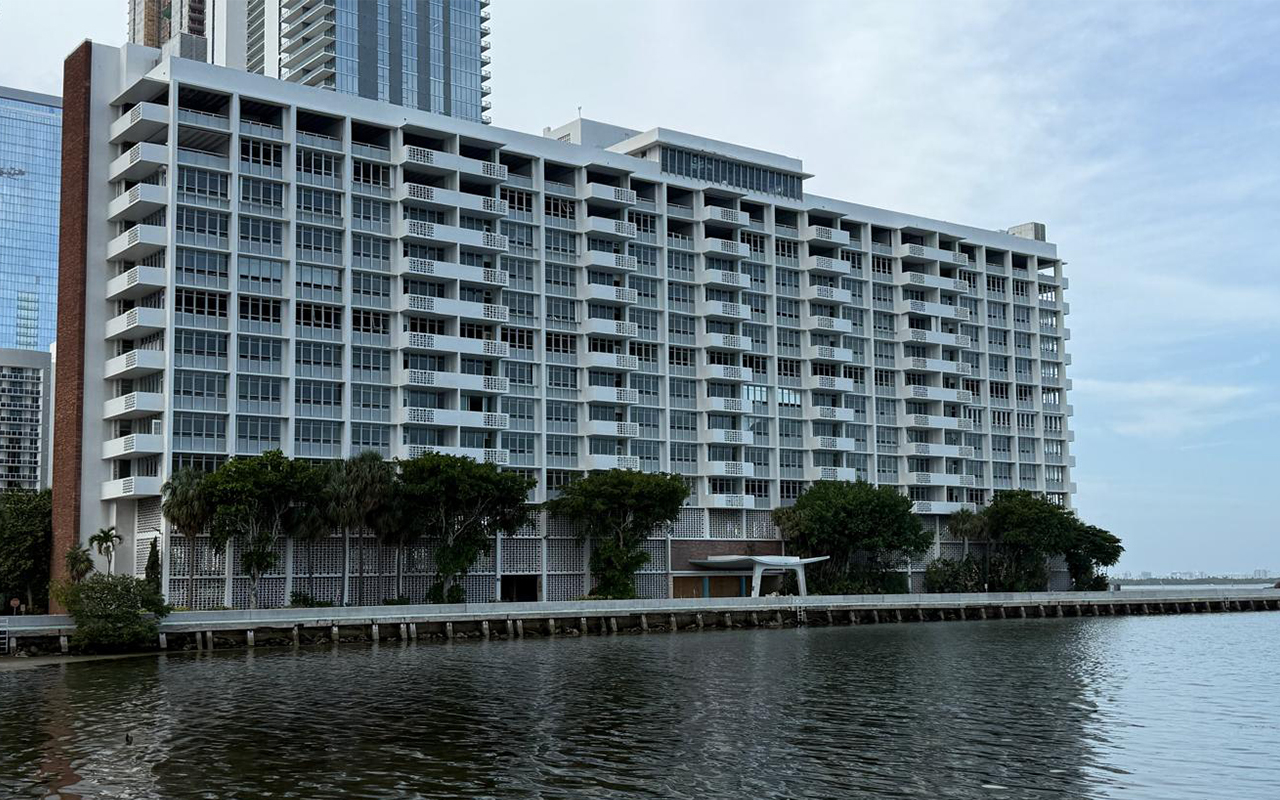
Two Roads Files New Petition Following Biscayne 21 Restoration Order
Less than three weeks after a Miami-Dade court ordered the restoration of Biscayne 21 and invalidated its prior condominium termination, Two Roads Development, through its affiliate TRD Biscayne, LLC, has filed a new lawsuit seeking equitable relief to terminate the condominium once again.
The newly filed petition asks the court to declare the 62-year-old waterfront building, located in Edgewater, effectively beyond repair and to allow termination and partition of the property, despite the recent ruling that preserved unit owners’ titles and required restoration of the condominium.
Developer Owns 183 of 192 Units at an Average of $831 Per Square Foot
According to the filing, TRD Biscayne, LLC currently owns 183 of Biscayne 21’s 192 total units, representing approximately 95.3% ownership of the building.
The filing also reveals that the developer acquired 183 of the building’s 192 units at an average price of approximately $831 per square foot, a detail that adds important context to the dispute as the remaining nine unit owners continue to assert their rights under the condominium’s original declaration and Florida law.
A Shift From Legal Authority to Economic Arguments
In contrast to earlier litigation, which focused on statutory termination authority and amendment language, the new petition largely reframes the dispute as an economic one.
The filing argues that restoring the building is not financially viable and contends that continued efforts to preserve the condominium would result in economic waste. It characterizes the remaining unit owners as obstructing termination rather than seeking re-occupancy.
Notably, the petition does not undo or supersede the recent appellate ruling that invalidated the prior termination and restored ownership rights. Instead, it seeks a different legal pathway to reach the same result: termination of the condominium.
Why Ownership Rights Remain Central to the Dispute
At its core, the renewed litigation highlights a fundamental tension in Miami’s redevelopment landscape: when does economic efficiency outweigh individual ownership rights?
Florida condominium law has long recognized that condominiums are not merely investment vehicles but forms of homeownership. Courts have repeatedly emphasized that termination statutes and equitable relief are not meant to be used to sidestep contractual rights embedded in condominium declarations.
While developers may argue that redevelopment maximizes value, homeowner protections exist precisely to prevent unilateral action that divests owners of their property interests without strict compliance with the law.
What Happens Next
The newly filed petition does not alter the existing court order requiring restoration of Biscayne 21. Any change to that outcome would require further judicial review and findings by the court.
For now, the case serves as a reminder that court rulings and legal process matter, particularly when homes — not just assets — are at stake.
As Miami continues to evolve, the Biscayne 21 dispute underscores why vigilance around homeowner rights remains essential, even amid intense redevelopment pressure.






Leave a Reply